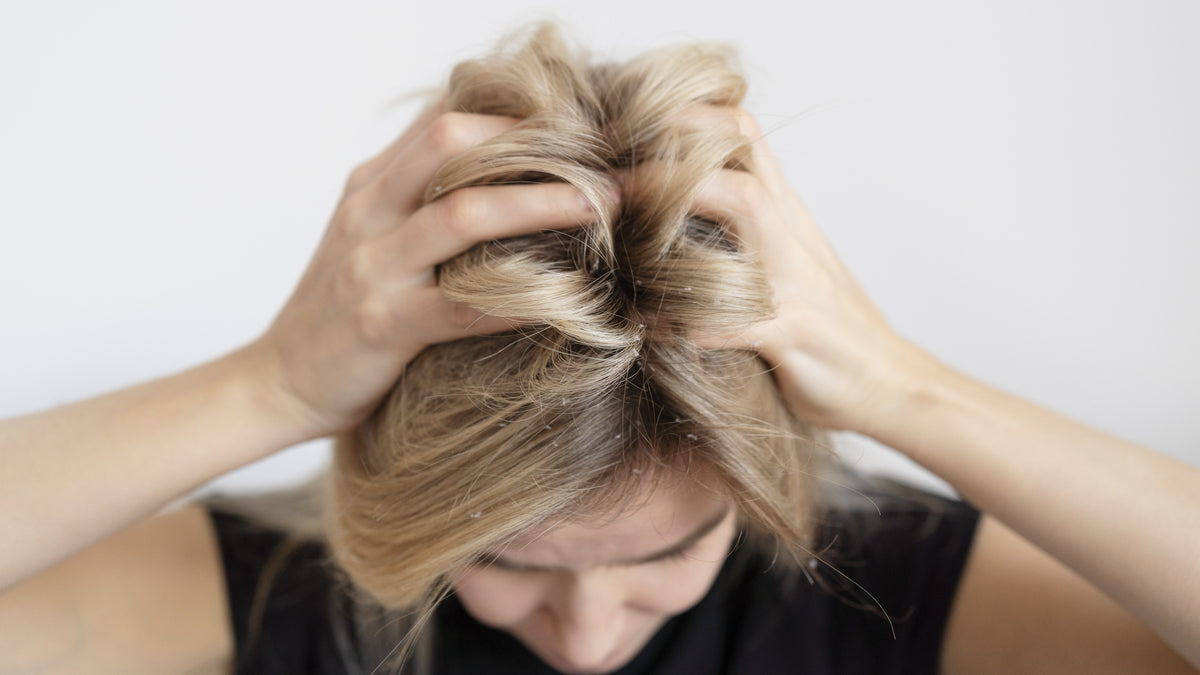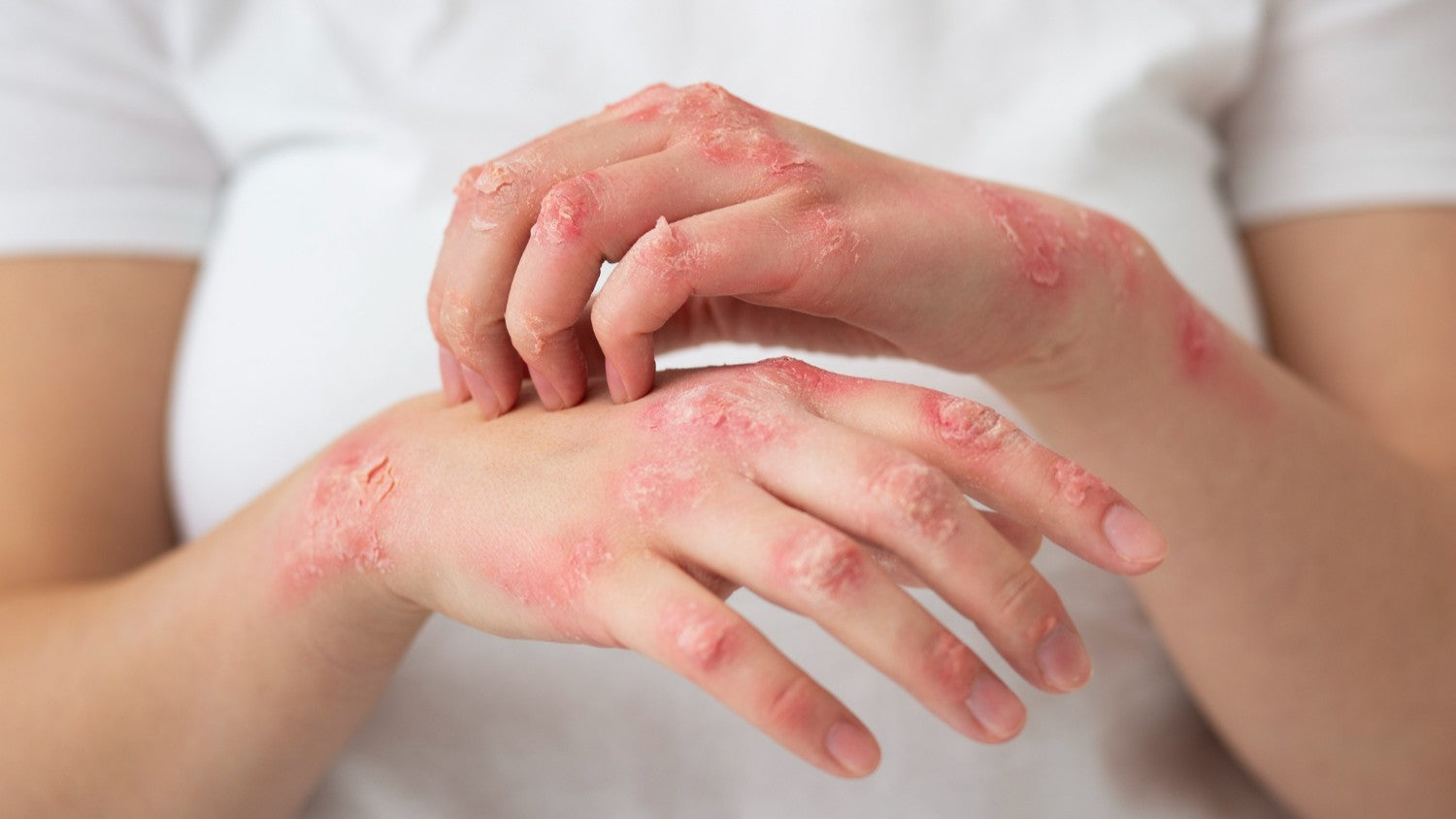
Picture the end of a long day: your dry scalp feels tight, then an itch you cannot ignore, then pale flakes on your dark jumper as you brush your hair. A dry scalp is one of the most common concerns we see in dermatology clinics, and one of the most misunderstood.
This guide explains how to moisturise scalp skin properly and keep your hair healthy: which steps to follow, which ingredients help, and why order matters. Good scalp health and dry scalp relief both start with rinsing away harsh ingredients rather than adding more product. We also separate ordinary scalp dryness from underlying skin conditions such as eczema, psoriasis or seborrhoeic dermatitis, which need the input of a properly qualified, board certified dermatologist rather than a new serum. Underneath almost everything here sits one structure: the hydrolipid film, the scalp's own natural barrier.
What does a properly moisturised scalp look like?
A properly moisturised scalp looks clear and feels comfortable, with no visible flaking, tightness or persistent itchiness. Many people confuse this with a scalp that is simply oily, but the two are not the same, and a healthy scalp is the foundation of good hair health.
Hydration is the water content held within the stratum corneum, the skin's outer layer. Oiliness reflects sebum production from the sebaceous glands. A scalp can be oily and dehydrated at once, exactly what happens in seborrhoeic dermatitis, covered later. A healthy scalp keeps both in balance: even tone, no white flakes along the parting, healthy hair that keeps its shine without greasy roots within a day or two of washing, no tightness after washing, and a surface that feels supple rather than rough. A simple check: part your hair gently — the scalp underneath will not shed visible flakes, nor look unusually shiny from a build-up of oil.

How to moisturise your scalp step by step?
Moisturising the scalp effectively follows four steps: gentle cleansing, exfoliating where needed, applying targeted hydration, and protecting the barrier afterwards. Order matters! A serum applied over an unwashed scalp will not absorb well.
-
Cleanse the scalp with a gentle, fragrance-free shampoo and lukewarm water to keep the scalp hydrated and moisturised, massaging for one to two minutes before rinsing.
-
Exfoliate gently once or twice a week (less often on a dry scalp) to loosen unwanted flakes and lift away dead cells.
-
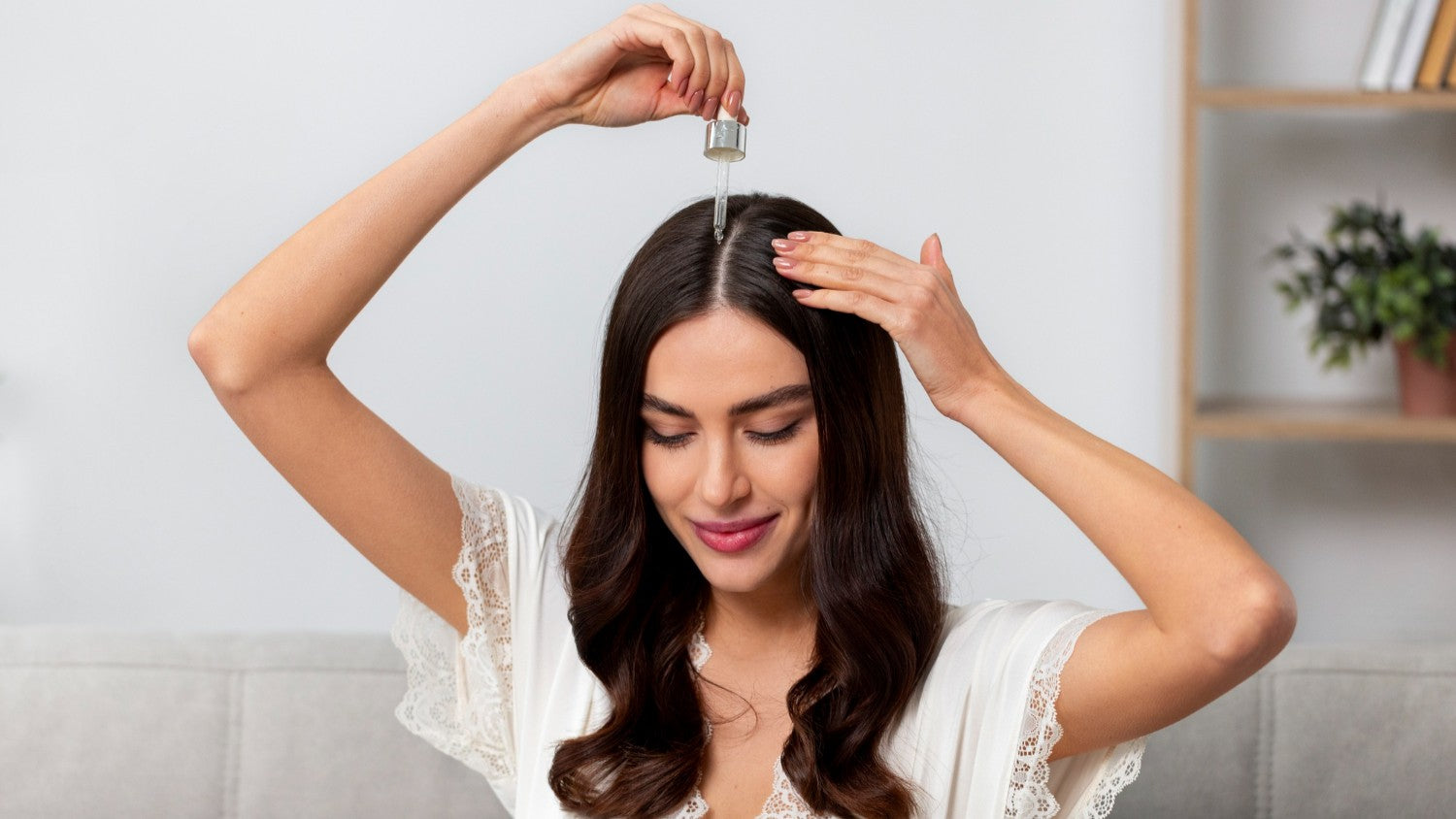
Apply your moisturiser of choice — a hydrating serum or leave-in treatment — directly onto the scalp while it is still slightly damp, focusing on drier patches.
-
Seal moisture in with a lightweight natural oil or a weekly scalp mask, avoiding the mid lengths if your hair looks greasy quickly.
-
Protect the rebuilt barrier by avoiding very hot water, hot-air drying and fragranced styling products afterwards.
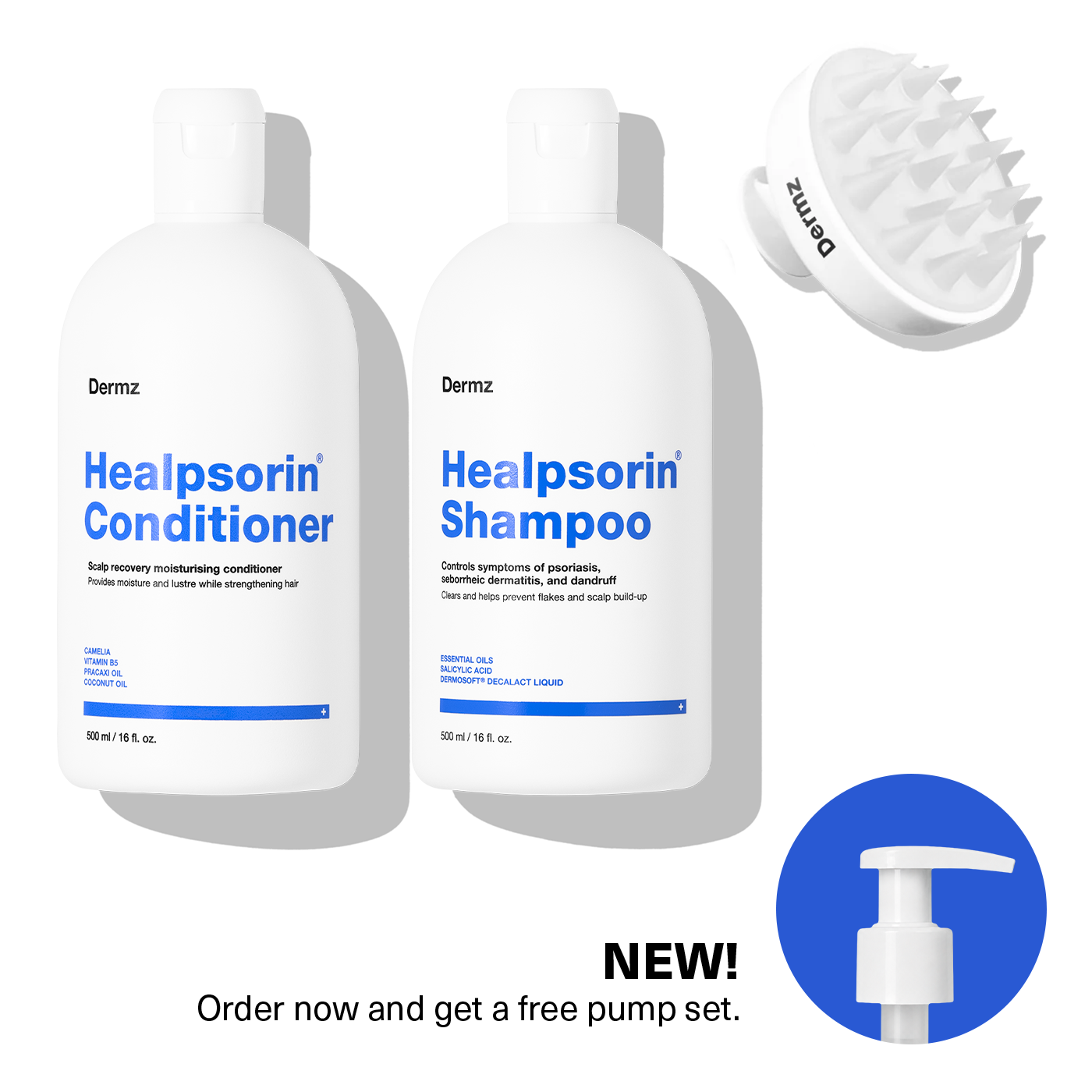
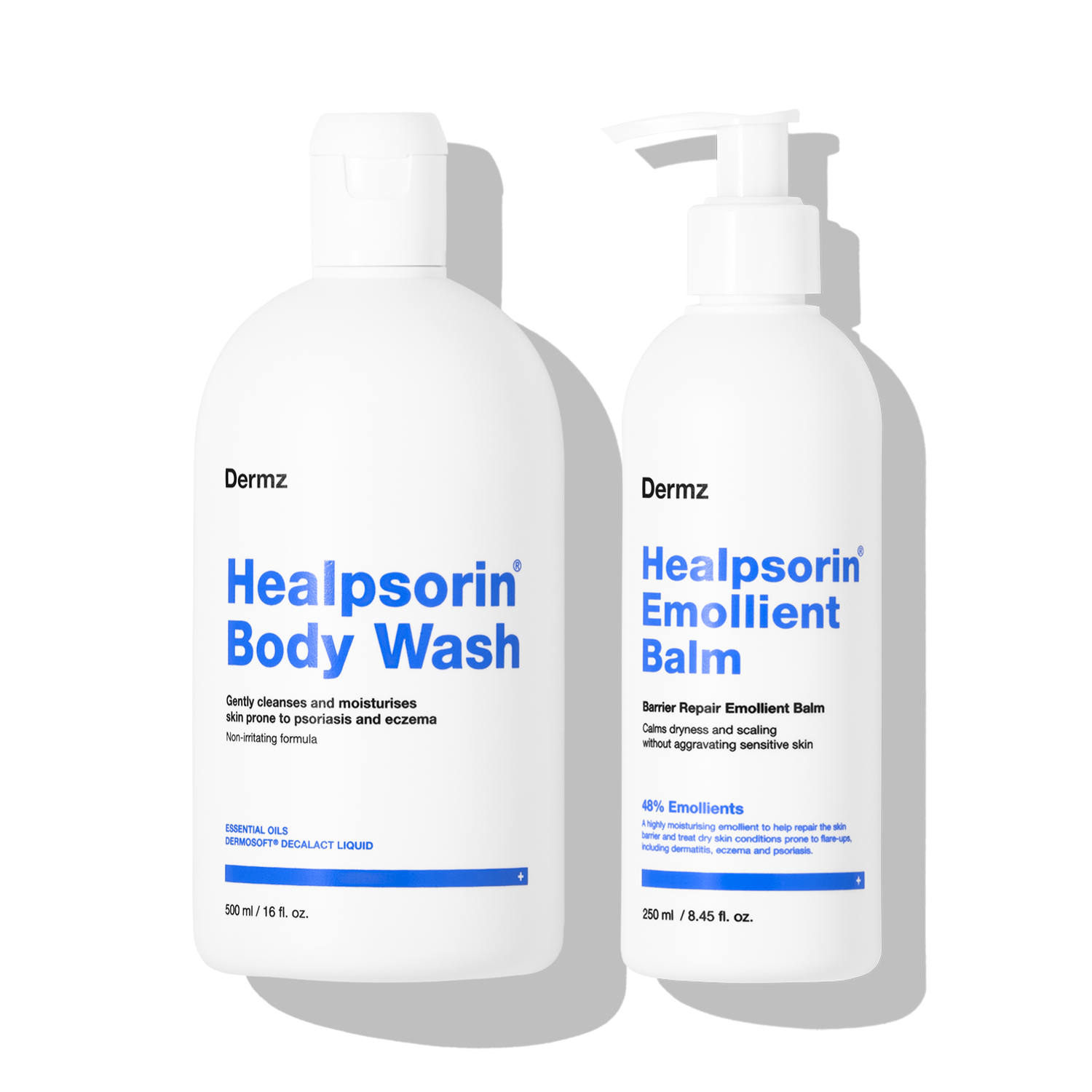
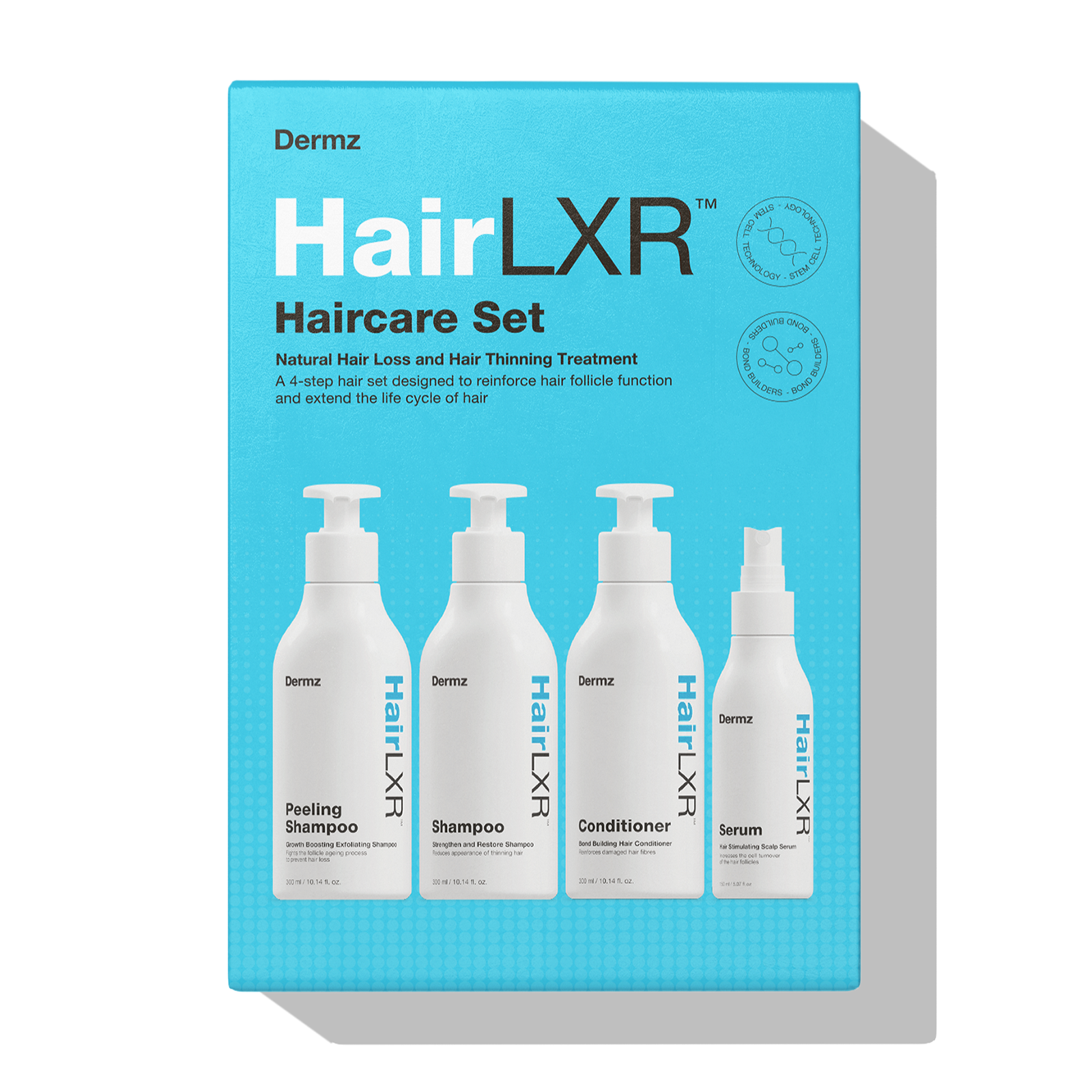
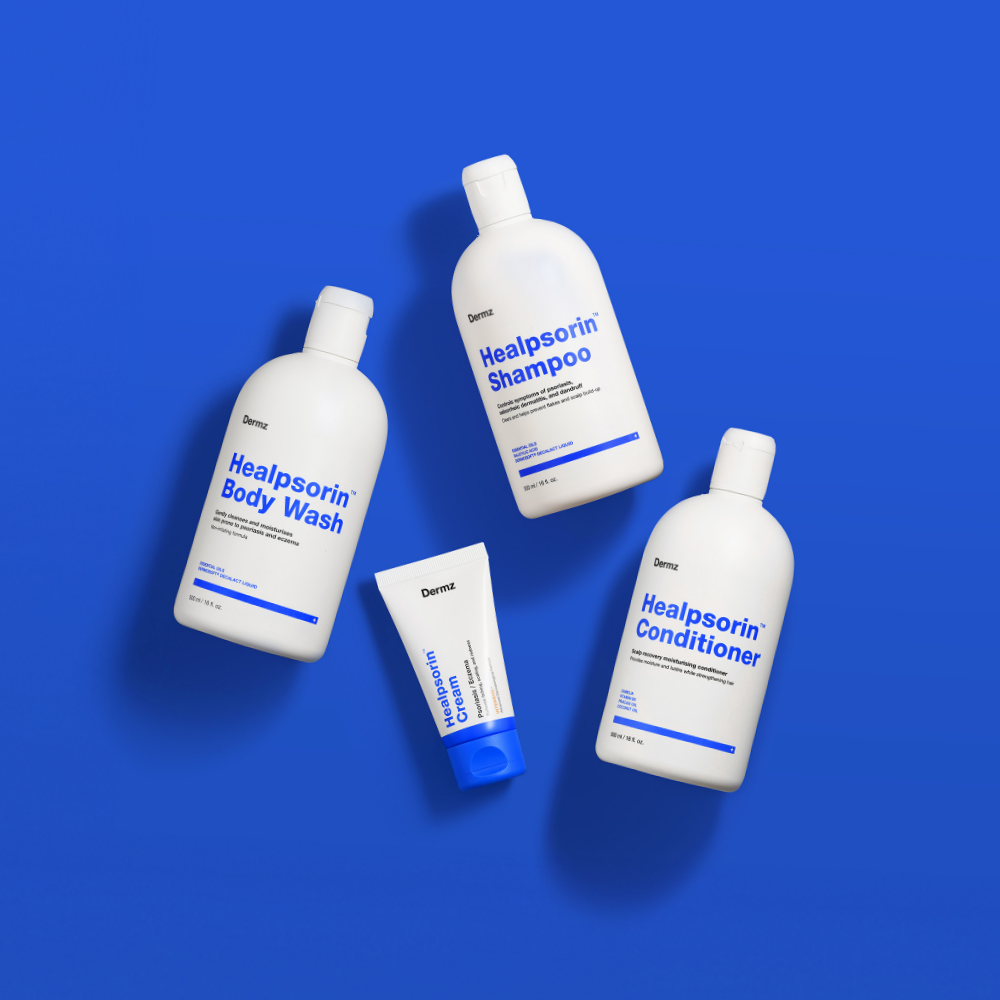
This mirrors structured hair care routines such as the Dermz Laboratories 4-Step Healpsorin Set, which moves through washing, shampooing, conditioning and moisturising the scalp in that order. The principle matters more than the product itself: cleanse first, exfoliate and hydrate second, protect last, and let a rinse-out conditioner — always a conditioner formulated for the hair rather than the scalp — do its job on the strands.
Which moisturising ingredients keep the scalp hydrated?
A good moisturiser keeps the scalp hydrated using four functional categories of ingredients, each working differently, which is why combining them outperforms relying on just one.
-
Humectants — hyaluronic acid, glycerin and aloe vera — draw water into the skin's outer layer. Topical hyaluronic acid serum has been shown to raise skin hydration by over fifty per cent after six weeks of regular use.
-
Emollients — natural oils such as jojoba oil and argan oil — smooth the surface and fill microscopic gaps between cells, easing the rough, flaky texture of a dry scalp.
-
Lipid-supporting ingredients — ceramides and essential fatty acids — help rebuild the intercellular cement holding the stratum corneum together, reducing transepidermal water loss.
-
Soothing agents — oat extract and tea tree oil, valued in hair care for calming irritation and itchiness while the barrier repairs, with tea tree in particular noted for its antimicrobial action.
Humectants pull water in; emollients and lipid-supporting ingredients help keep it there, which is why pairing categories works better than relying on natural oils or aloe vera alone.
Why does the scalp lose moisture?
The scalp loses moisture through environmental exposure, everyday hair care habits and, less often, an underlying skin condition. All converging on one mechanism: a disrupted hydrolipid barrier and rising transepidermal water loss.
-
Environmental exposure — cold, dry air and central heating lower ambient humidity, pulling moisture from exposed scalp skin.
-
Over-washing — frequent shampooing, especially with water that is too hot, strips the natural oils that seal the hydrolipid film.
-
Harsh shampoos and sulphates — strong detergents such as sodium lauryl sulphate remove surface lipids faster than the scalp can replace them.
-
Heat styling and skin conditions — hairdryers and high-heat tools accelerate water loss with each session, while eczema, psoriasis and seborrhoeic dermatitis disrupt the barrier structurally, independent of daily habits.
Once the stratum corneum is compromised, it holds onto water less effectively, so water loss rises and tiny cracks can let irritants penetrate more easily. Research linking wash frequency to scalp physiology found higher water loss with more frequent washing, even where overall hydration did not differ significantly — dryness is often about a weakened barrier, not simply a lack of water. Staying well hydrated, drinking at least eight glasses of water a day among other habits, supports skin health generally, though scalp treatments applied directly do the heavier lifting for repairing irritation and barrier damage.
How to exfoliate the scalp to remove dead skin cells and loosen flakes?
Regular exfoliation helps remove dead skin cells and loosen flakes in three stages: choosing the right method, applying it correctly, and following up with hydration.
-
Choose the right method: a gentle mechanical scrub or brush suits a normal-to-oily scalp type, while a mild keratolytic treatment containing salicylic acid better suits a flaky, dry scalp that is prone to irritation.
-
Apply your chosen exfoliant to a clean, damp scalp using light circular motions with your fingertips, never your nails, for about one to two minutes.
-
Limit frequency by scalp type: once or twice weekly for normal to oily types, closer to once every ten to fourteen days for a dry or sensitive one.
-
Rinse with lukewarm water and follow immediately with one of your regular scalp treatments while the skin is still slightly damp.
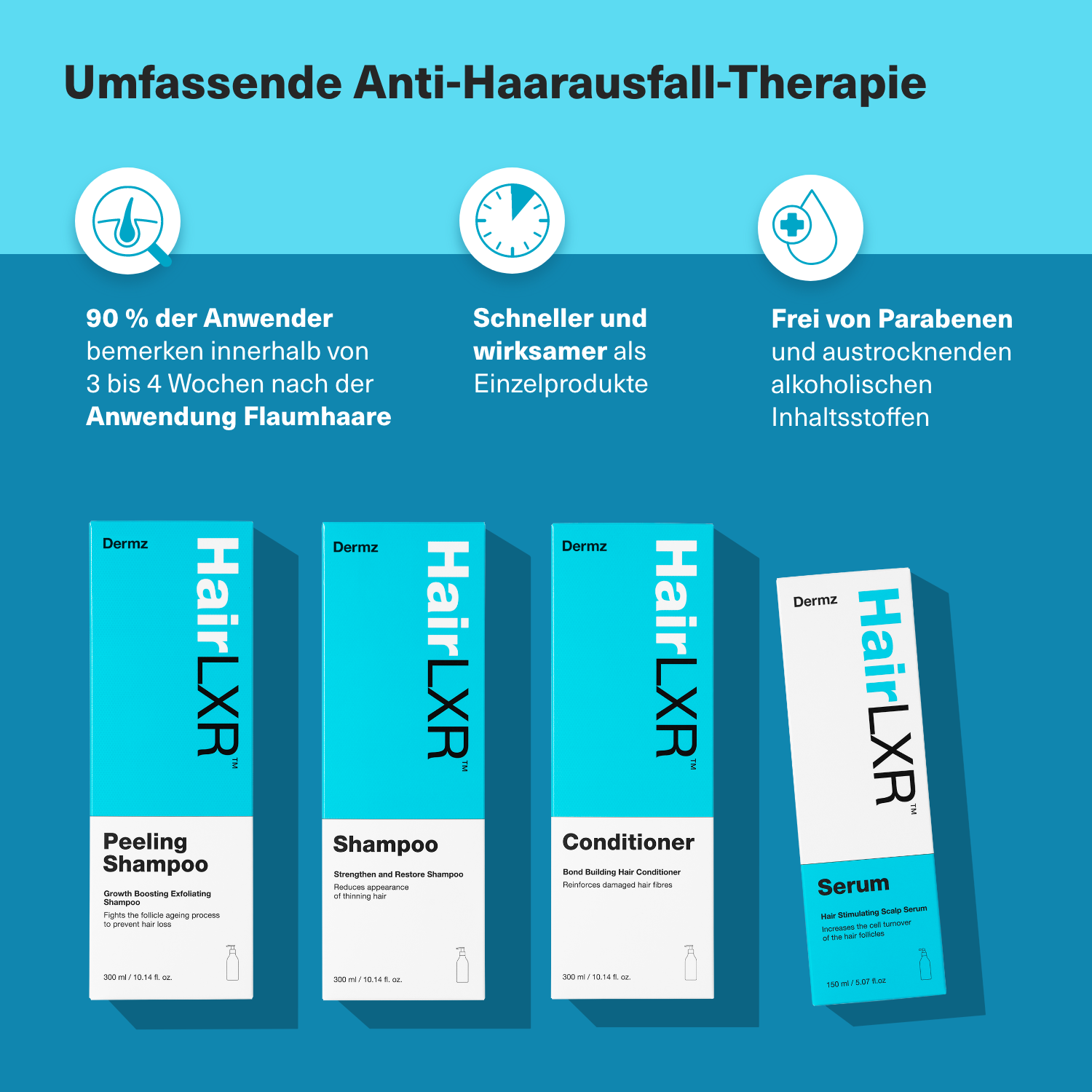
Mechanical exfoliation loosens dead skin through gentle friction but can cause micro-injury if overdone. Keratolytic exfoliation with salicylic acid dissolves the bonds between dead cells instead, easing thicker flakes away without rubbing. The Dermz Laboratories HairLXR Peeling Shampoo illustrates this gradual approach: used two to three times in the first week, building to four or five by the third, always with a circular scalp massage that also supports healthy blood flow to the follicles. Do not exfoliate a scalp with active cracks, oozing, bleeding or acute inflammation — have a dermatologist assess it first, and stop if you notice increased stinging or fresh skin damage.

How to keep the scalp moisturised without making hair greasy?
Four practical rules keep the scalp moisturised without making hair greasy, and the common thread is where and how much product you apply, not which ingredient you choose.
-
Apply hydrating serums directly onto the scalp skin, not along the full length of your hair, to avoid weighing the strands down.
-
Measure the amount — a few drops massaged into the scalp is usually plenty, since excess migrates onto the hair and creates a greasy look at the roots.
-
Choose lightweight, fast-absorbing leave-in treatments over heavier, occlusive oils if your hair type is fine or your hair type leans oily.
-
Reserve richer natural oils and a nourishing conditioner for the mid lengths and ends rather than the scalp, especially on damaged hair prone to dryness at the tips.
Separate the needs of your scalp from the appearance of your hair shaft: the scalp needs hydration, a gentle massage and a well-maintained barrier, while the hair shaft mainly benefits from emollients smoothing its strands. This explains greasy-looking roots on a scalp that still feels genuinely dry underneath — the culprit is usually product applied too close to the roots, rather than the water itself.
Which expert tips apply when scalp dryness comes from an underlying condition?
When scalp dryness comes from an underlying skin condition rather than everyday habits, the priority shifts from home care to recognising when a professional opinion is needed.
-
It is worth tracking how long the dryness, flaking or itchiness has lasted — persistence beyond three to four weeks despite consistent leave in treatments and other scalp health basics like a gentle scalp massage routine is a signal to stop self-treating.
-
Consider reviewing your recent product history, including hair dyes, dry shampoo or medicated shampoos, since a change in routine often points to the trigger.
-
Avoid self-diagnosing eczema, psoriasis or seborrhoeic dermatitis from appearance alone. These conditions can look remarkably alike.
Remember: always book an assessment with a dermatologist or your GP if redness, swelling, oozing, bleeding, pain or fever accompanies the dry scalp.
Is a dry scalp the same as dandruff?
No, a dry scalp and dandruff are not the same condition, even though both can produce visible flakes. A dry scalp results from a lack of moisture and lipids in the skin barrier, often triggered by cold weather, over-washing, product build up or harsh products.
Dandruff is usually linked instead to Malassezia yeast activity and excess sebum, meaning the scalp underneath can actually be oily rather than dry, even though a dry scalp and dandruff are often confused by patients describing the same flakes.
|
Feature |
Dry Scalp |
Dandruff |
|
Underlying cause |
Lipid deficiency and dehydration in the skin barrier |
Malassezia yeast overgrowth and excess sebum |
|
Flake appearance |
Small, white, dry-looking flakes |
Larger, often oilier or yellowish flakes |
|
Scalp feel |
Tight, rough, sometimes itchy |
Can feel oily despite visible flaking |
|
Typical trigger |
Cold weather, over-washing, harsh shampoos |
Excess sebum, yeast activity, product build up |
Because the two look similar but stem from opposite scalp environments, treating one as the other rarely helps. A rich moisturiser aimed at dry skin can make dandruff worse, while a stripping anti-dandruff shampoo can leave a genuinely dry scalp feeling tighter still.

How to moisturise a scalp affected by eczema or psoriasis?
Moisturising a scalp affected by eczema or psoriasis follows three supporting principles, designed to work alongside — never instead of — any treatment plan agreed with your dermatologist.
-
Cleanse with a fragrance-free, pH-balanced shampoo or wash formulated for sensitive, compromised skin, avoiding water that is too hot.
-
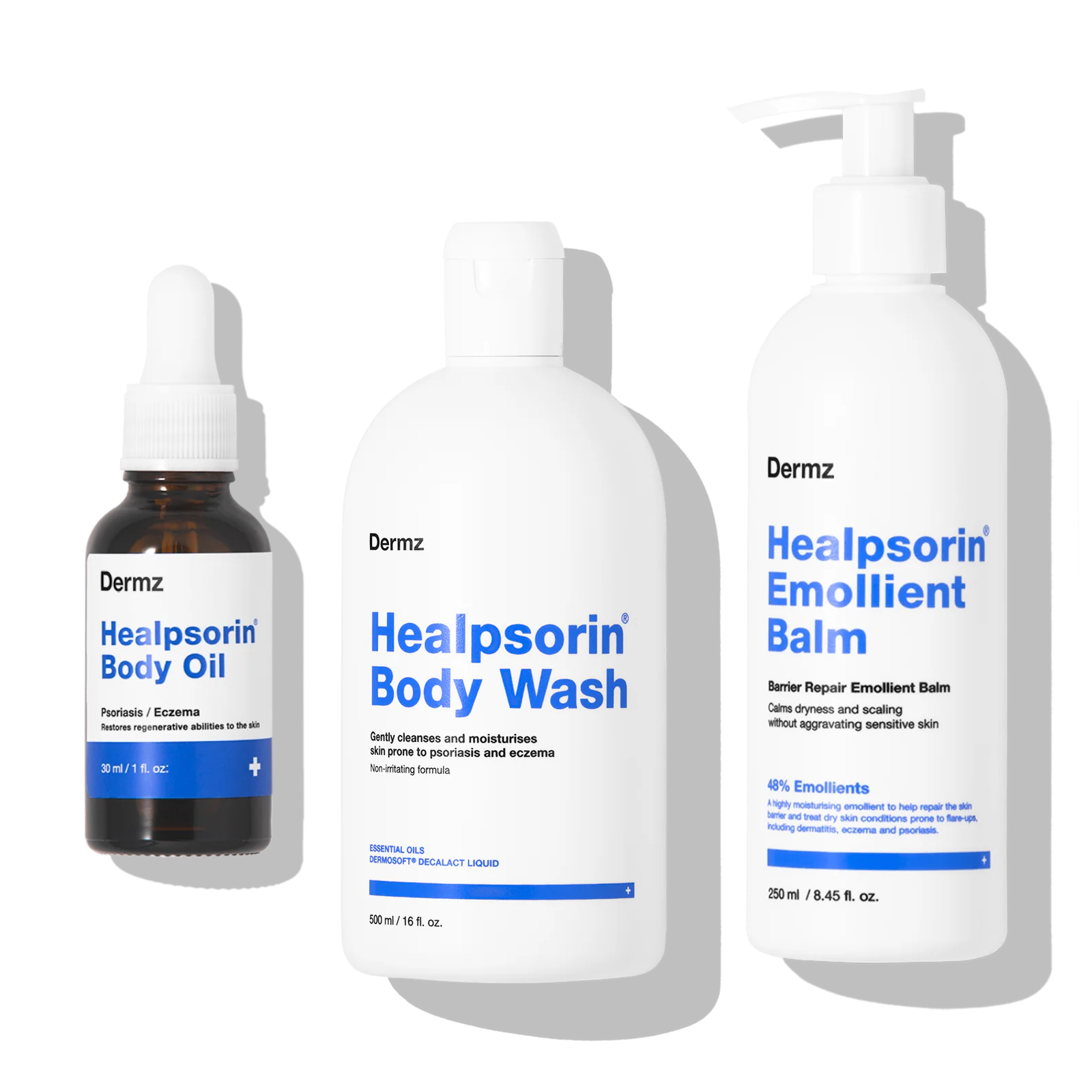
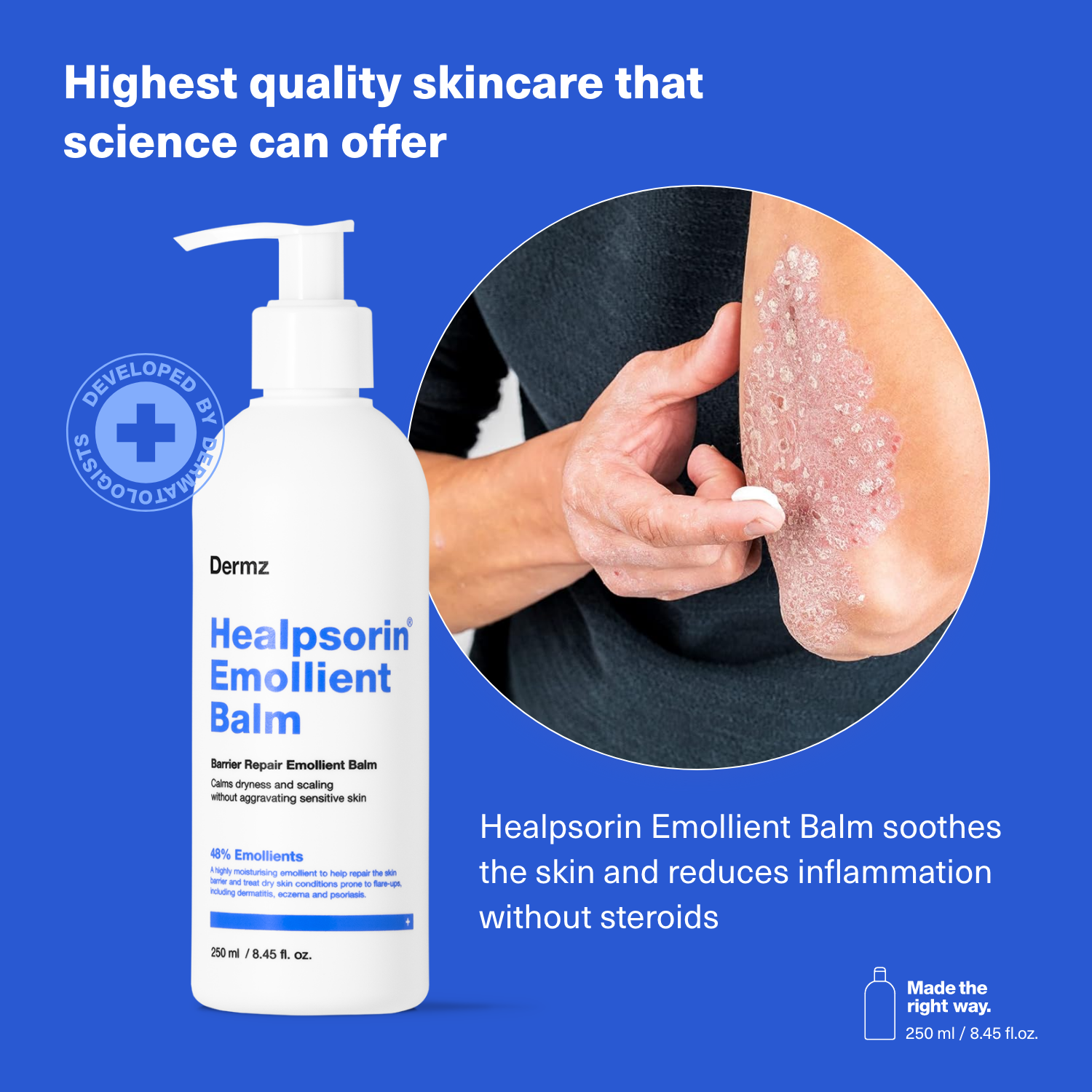
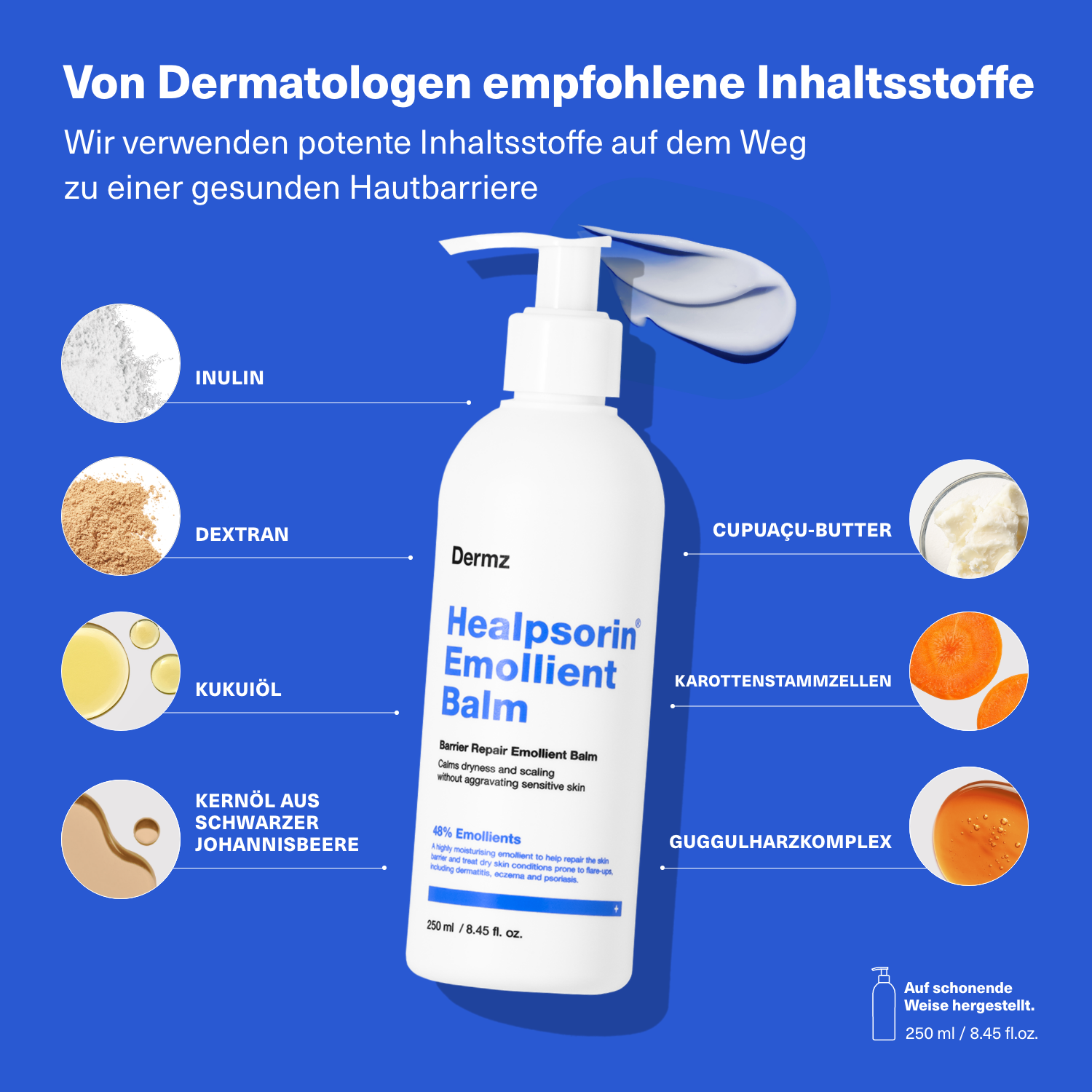
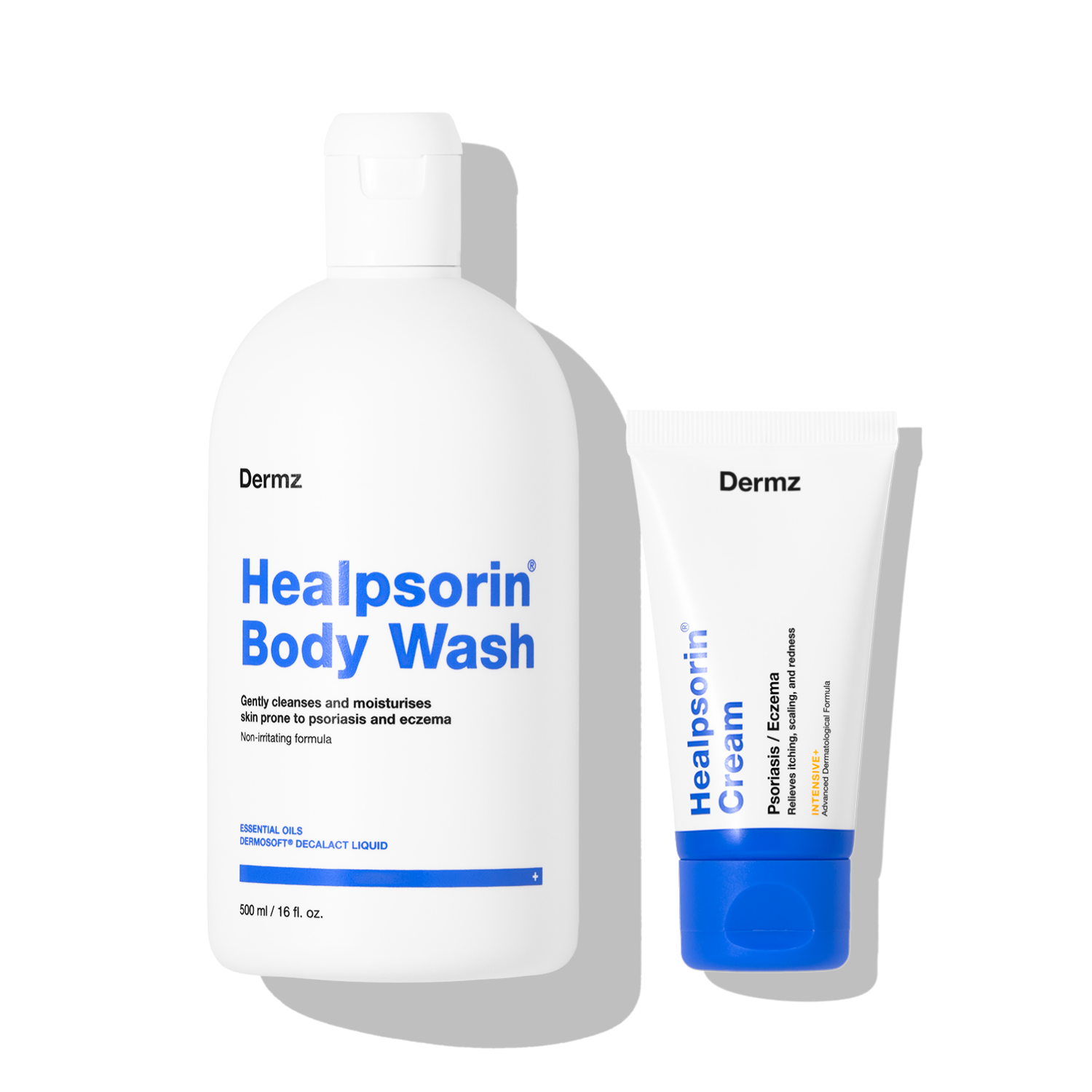
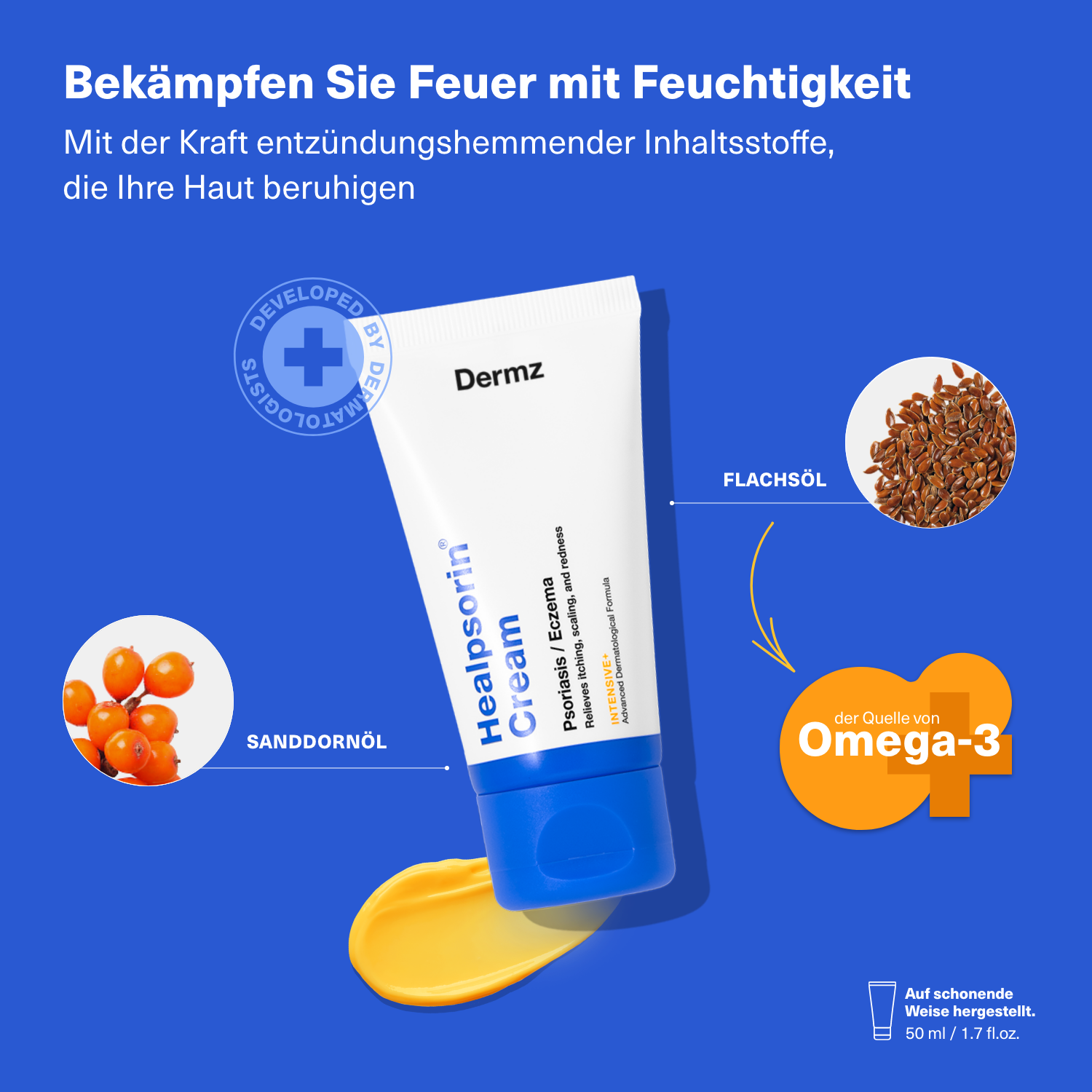
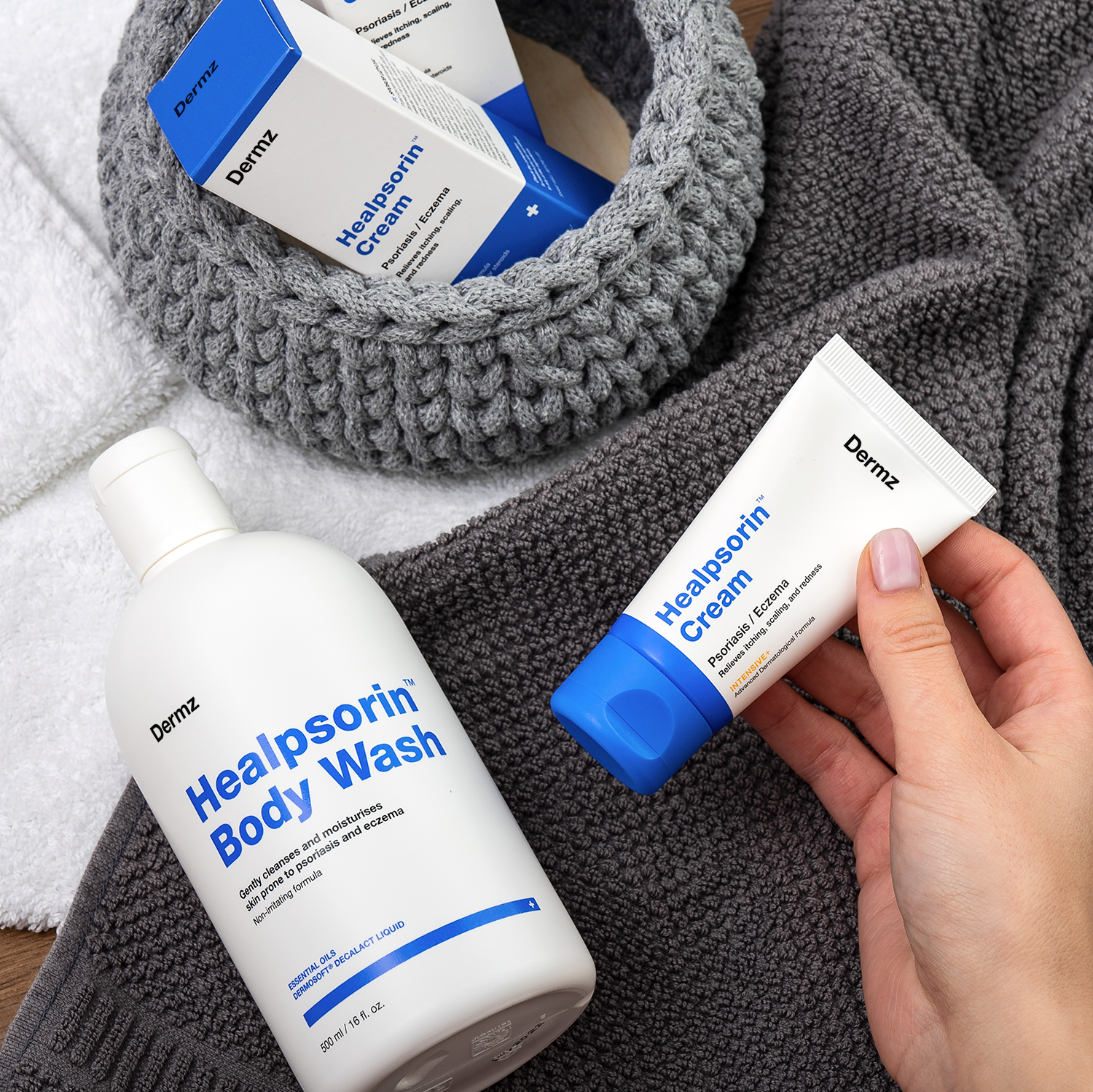
Apply barrier-supporting, steroid-free dermocosmetics as leave in treatments or a weekly scalp mask — the Dermz Laboratories Healpsorin range is one example — to help soothe itching and support skin barrier regeneration between flares.
-
Moisturise consistently, even when your scalp looks calm, since maintaining hydration during remission helps reduce how often flares return, and avoid known triggers such as fragranced styling products, harsh sulphates or unnecessary exfoliation during an active flare.
These dermocosmetic products soothe itching, alleviate symptoms and support skin barrier regeneration as part of steroid-free daily maintenance. They do not cure eczema or psoriasis, and none should replace medical treatment. Contact your GP or dermatologist if the affected area becomes painful, swollen, warm to the touch, or starts oozing or crusting; if care brings no improvement after three to four weeks; or before starting or stopping any topical steroid treatment.
How does seborrheic dermatitis change scalp moisture needs?
Seborrhoeic dermatitis changes scalp moisture needs by creating a barrier problem with a counterintuitive consequence: the skin becomes more prone to water loss and more oily at the same time, so standard "dry skin" or "oily skin" advice does not quite fit.
Affected scalp skin shows raised water loss alongside reduced stratum corneum hydration, even though surface lipid levels are often higher than on unaffected skin: water is being lost faster than normal while sebum production increases at the same time.
That has a direct care consequence. A strongly degreasing shampoo used alone tends to worsen the underlying dehydration, while a rich, occlusive moisturiser aimed purely at dryness can aggravate the yeast-related component. The practical answer sits between the two: cleansing that manages sebum and Malassezia activity without stripping the scalp bare, paired with lightweight, non-comedogenic hydration rather than heavy oils. As noted earlier, a shiny, oily-looking scalp does not automatically mean the skin underneath is well hydrated — in seborrhoeic dermatitis, it frequently means the opposite.
Do medicated shampoos and topical steroids leave the scalp drier?
Yes, medicated shampoos and topical steroid treatments can leave the scalp drier, but only under specific circumstances — very frequent use, alcohol-based formulations rather than creams or foams, or prolonged use without a complementary moisturising step. Used exactly as directed for a limited course, neither is inherently more drying than the condition being treated.
Do not stop or adjust a prescribed steroid treatment course based on this article — dosage and duration should always be agreed with the prescribing doctor. It is reasonable to discuss complementary emollients with your GP or dermatologist, since applying a barrier-supporting moisturiser at a different time of day to a medicated shampoo is a well-established way of easing any drying effect while still supporting good scalp health, without interfering with treatment.
How does a moisturised scalp support hair follicles and healthy hair growth?
A well-hydrated scalp supports hair follicles and healthy hair growth through an indirect but quite logical chain:
-
a well-hydrated barrier reduces the tightness and itchiness that drive scratching;
-
less scratching means less mechanical trauma to the follicles;
-
a calmer follicular environment, helped along by regular scalp massage to encourage blood flow, better supports the normal hair growth cycle, and hair is less likely to break at the scalp from repeated friction.
Moisturising the scalp, of course, does not treat hair loss and is not a substitute for proper investigation if you notice thinning, shedding or bald patches — those symptoms warrant their own dermatological assessment for underlying skin conditions. Scalp hydration offers comfort and a more stable environment for healthy hair growth, one contributing factor among several, rather than a direct driver on its own.
Which harsh products strip the scalp of its natural moisture?
Several categories of everyday products and habits can strip the scalp of its natural moisture, each through a slightly different mechanism.
-
Aggressive detergents, such as sulphates including sodium lauryl sulphate (SLS) at high concentrations, strip surface lipids faster than the scalp can replenish them.
-
High-alcohol-content styling products, including certain sprays, gels and mousses, evaporate quickly and pull moisture from the surrounding skin.
-
Fragrance compounds in many shampoos and styling products are a recognised cause of irritant contact dermatitis, allergic reactions and general irritation on already sensitised skin.
-
Frequent chemical treatments and harsh styling habits — bleaching, colouring, chemical straightening, vigorous brushing, tight hairstyles and high-heat tools — repeatedly disrupt the scalp's surface pH and add mechanical or thermal stress.
Concentration, formulation and frequency of use matter far more than the mere presence of one ingredient on a list. A sulphate-based shampoo used occasionally on a resilient scalp is one thing; the same shampoo used daily on skin already compromised by eczema or psoriasis is quite another.

Putting it all together
A genuinely well cared-for scalp comes down to two things working together: eliminating the everyday habits that damage the barrier — water that is too hot, harsh detergents, excessive heat styling, unnecessary scratching — and consistently supporting that barrier with the right hydrating ingredients, applied in the right order and the right places. This balance rarely happens overnight, but it is a realistic goal for most ordinary cases of scalp dryness.
Where flaking, itchiness or discomfort persist despite sensible use of a good moisturiser, or an underlying condition such as eczema, psoriasis or seborrhoeic dermatitis is at play, a steroid-free daily maintenance routine — of the kind found in the Dermz Laboratories range — can sit alongside whatever your dermatologist recommends, helping soothe itching and support skin barrier regeneration day to day. Patience and consistency achieve far more than any single product, so give a new routine several weeks before judging it, and seek a professional opinion if your scalp is telling you something home care alone cannot fix.
This article is intended for general information and does not replace a patient information leaflet or personalised medical advice. If you are concerned about your symptoms, please speak to a GP, pharmacist or dermatologist.
FAQ
-
What can I put on my scalp to moisturise it? The most effective approach combines a humectant such as hyaluronic acid or glycerin to draw water in, an emollient such as jojoba oil to smooth the surface, and a lipid-supporting ingredient such as ceramides to help the scalp barrier hold on to that moisture rather than losing it again within hours.
-
What is the best way to moisturise a dry scalp? Cleanse gently with a fragrance-free shampoo, exfoliate once or twice a week if flaking is present, then apply a hydrating serum or leave-in treatment while the scalp is still slightly damp, sealing it in with a lightweight oil — applying products in this order matters more than any single ingredient on its own.
-
What is the best way to hydrate the scalp? Alongside topical hydration, a humidifier at home helps maintain ambient moisture levels during dry, centrally heated months, and foods rich in omega-3 fatty acids support overall skin and scalp health from the inside, though neither replaces a barrier-supporting scalp routine.
-
How do I get moisture back in my scalp? Moisture returns fastest when over-washing, very hot water and harsh sulphates are reduced at the same time as a moisturising shampoo is introduced two to three times weekly, since removing the causes of water loss works together with, rather than instead of, active hydration.
-
Is a moisturising shampoo enough, or do I need an anti-dandruff shampoo too? It depends on the underlying cause: a moisturising shampoo used two to three times weekly suits ordinary dry scalp, whereas persistent flaking linked to Malassezia yeast activity responds better to an anti-dandruff shampoo, and if symptoms persist or worsen despite the right choice, it is worth seeing a dermatologist or GP.