If you are wondering how to get rid of cradle cap, the safest approach is usually to soften the scales, gently loosen only those that come away easily, and wash your baby's scalp with a mild, unfragranced baby shampoo. Cradle cap is a common, harmless form of infantile seborrhoeic dermatitis. It is a harmless skin condition that is usually neither itchy nor painful and often settles naturally within a few months.
How can you get rid of cradle cap safely?
To remove cradle cap safely, follow a gentle sequence: soften, loosen and wash, without trying to clear every scale at once. The exact cause of cradle cap is not fully understood. Sebaceous glands – the glands that produce sebum, the skin's natural oil – appear to play a part, possibly under the influence of maternal hormones. The yeast Malassezia, which normally lives on human skin, has also been implicated, although its exact role remains uncertain. Cradle cap is not caused by poor hygiene and cannot be caught from other babies.
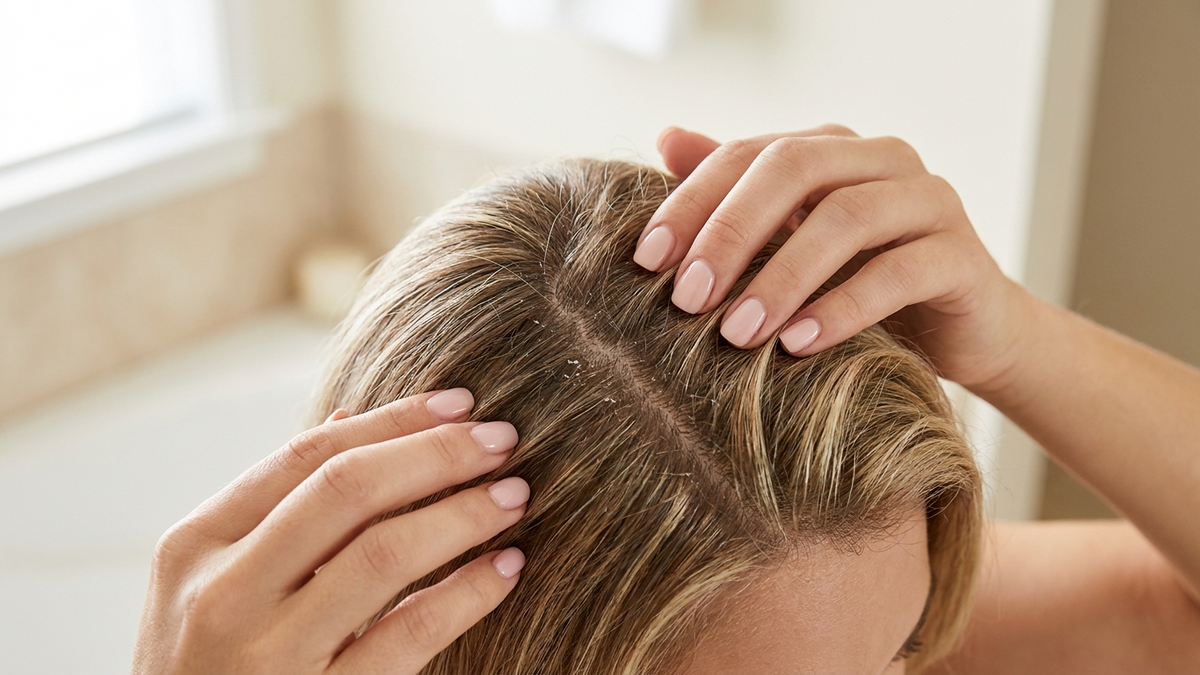
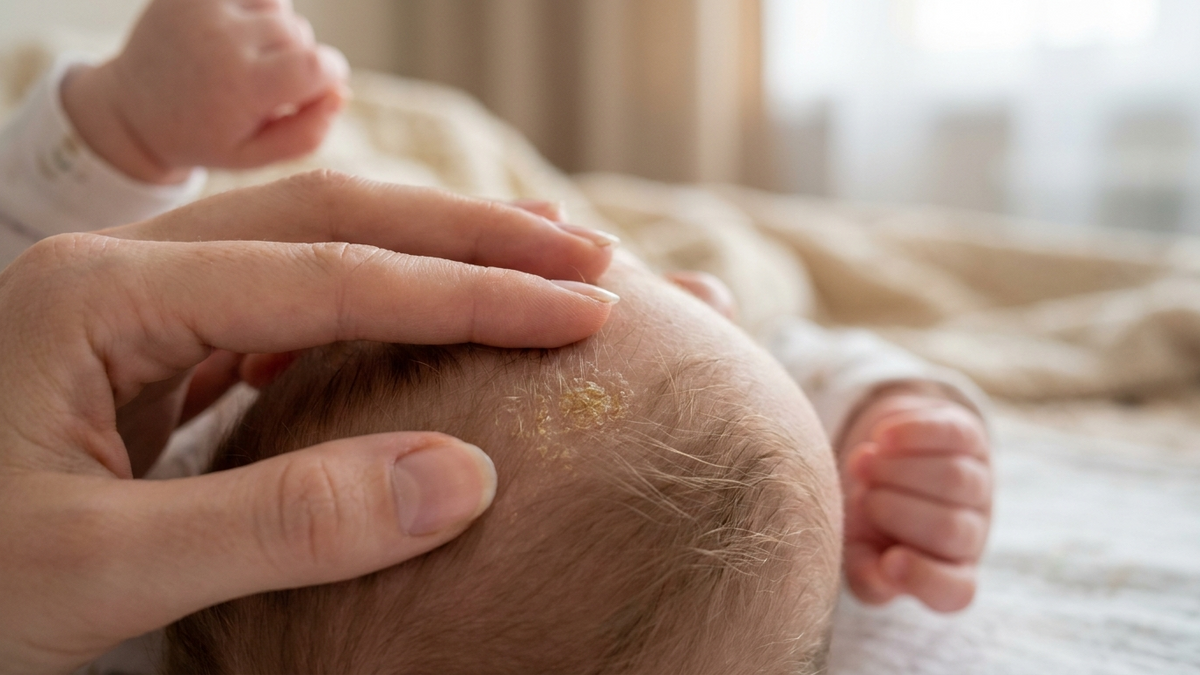
Typical symptoms of cradle cap include greasy, scaly skin with white or pale yellow scales on the baby's head. Some parents first notice small white patches or yellow scales between the hair. The scales contain shed skin cells mixed with surface oils, which gives them their characteristic greasy appearance. The skin underneath may look pink or red on lighter skin, or lighter or darker than the surrounding skin on brown or black skin. Although the scalp is the usual site, cradle cap can also affect the baby's eyebrows, ears, face, skin folds and baby's nappy area.
Soften cradle cap scales with an emollient or suitable oil
A gentle, unfragranced emollient – a moisturising product that helps soften and protect the skin – can make firmly attached scales easier to loosen without rubbing your baby's delicate skin.
-
Gently massage a small amount of an emollient suitable for babies onto the affected areas of the baby's scalp. Coconut oil is also included in current NHS advice. If you use baby oil, make sure it is suitable for infant skin and follow the product instructions.
-
Leave it on only for the period recommended on the product or by a healthcare professional. There is no need to use too much oil or routinely leave it on overnight.
-
Follow with gentle brushing and washing.
A thin layer of petroleum jelly, often known by the brand name Vaseline, can also help soften firmly attached scales. It does not treat the underlying process that causes the scaling, so think of it as a way to soften the scales before washing rather than as a treatment that gets rid of cradle cap by itself. White petrolatum is also listed by DermNet as an option that can be useful in infantile seborrhoeic dermatitis.
Gently loosen cradle cap scales with a soft baby brush
Use a soft bristled baby brush only on scales that have already softened and lift easily from your baby's scalp.
-
Brush with very light pressure.
-
Remove only scales that come away without resistance.
-
Leave firmly attached scales in place and return to gentle softening and washing later.
Do not use your fingernails, a sharp comb or vigorous rubbing to remove cradle cap. If a scale resists, leave it alone. Picking or scratching the crusts can damage the baby's skin and increase the risk of a secondary infection.
Wash away cradle cap flakes with a mild baby shampoo
Washing helps remove loosened flakes as well as any remaining emollient or oil from your baby's hair and scalp. Wet the hair, apply a small amount of mild, unfragranced baby shampoo, massage it gently over the scalp with your fingertips and rinse thoroughly.
There is no single washing schedule that suits every baby. How often you wash your baby's hair should depend on your baby's skin, the product instructions and professional advice, particularly if eczema or another diagnosed skin condition is also present. Do not use adult shampoos, soaps or other medicated scalp products unless a healthcare professional specifically recommends them for your baby. Strongly fragranced products should also be avoided.
If scales appear elsewhere on the body, including the baby's nappy area, gentle washing with water and an emollient is preferable to soap.
Use targeted cradle cap treatments with professional advice
If routine care is not enough to treat cradle cap, ask a pharmacist, GP or another qualified healthcare professional for advice. A pharmacist can help you choose an infant-appropriate emollient, unperfumed baby shampoo or another suitable skincare product.
Persistent, extensive or inflamed infantile seborrhoeic dermatitis sometimes needs medical assessment. Depending on the diagnosis and severity, a doctor may recommend a topical antifungal – an antifungal preparation applied directly to the skin – or a low-potency topical corticosteroid, meaning a mild anti-inflammatory steroid applied to the affected skin for a limited period. These treatments are not necessary for every baby's cradle cap, and evidence for many interventions in infants remains limited. Do not use medicated products intended for adults on a baby's scalp unless a healthcare professional has specifically advised you to do so.
When should you seek medical advice for your baby's cradle cap?
Seek medical advice if your baby's cradle cap is getting worse, is unusually widespread, does not improve with appropriate home care or develops features that are not typical of uncomplicated cradle cap. A clinician can then check whether another skin condition or a complication may be responsible.
Persistent cradle cap that does not improve with home care
If cradle cap does not improve after a few weeks of gentle home care, speak to your GP, health visitor, paediatrician or pharmacist. You should also seek advice if the scaly skin becomes more extensive, affects large areas of the body or repeatedly returns in a severe form. NHS guidance specifically recommends GP assessment when cradle cap has not improved after a few weeks of treatment or is present across the body.
Before the appointment, note when the symptoms of cradle cap began and which products you have already used, including baby oil, shampoo, emollients or other cradle cap treatments. This can help the healthcare professional understand what has already been tried.
Warning signs of infection or another skin condition
Bleeding, leaking fluid, marked swelling or significant soreness are not typical symptoms of cradle cap and should be assessed by a healthcare professional.
-
Bleeding
-
Leaking fluid or discharge
-
Swelling
-
Marked soreness
-
Significant itching
-
Unpleasant smell
These signs do not automatically mean your baby has an infection, but they do warrant assessment because another skin condition or a complication may be present. Atopic eczema, impetigo, psoriasis, irritant dermatitis and, less commonly, tinea capitis – a fungal infection of the scalp – can resemble cradle cap.
If your baby seems generally unwell, has difficulty breathing, will not feed or is unusually sleepy, seek urgent medical assessment regardless of the scalp symptoms.
How long does it take to get rid of cradle cap?
Cradle cap usually improves over a period of weeks to a few months rather than after a fixed number of washes. You may notice that individual scales become easier to remove quite quickly after softening, but this is different from the condition itself resolving. Cradle cap is generally self-limiting and normally settles during infancy.
If you are looking for the fastest way to get rid of cradle cap safely, the answer is still gentle care. Softening the scales with an appropriate emollient, removing only loosened scales and washing the baby's scalp can help manage the build up without damaging the skin. Scraping harder or picking at stubborn scales will not safely speed up the process.
Should you leave cradle cap alone or remove it? Mild cradle cap that does not bother your baby does not always need active removal. If you would like to reduce the visible scales, do so gently rather than trying to clear the scalp completely. Some of your baby's hair may come away with loosened scales; this is usually temporary and the hair should grow back.
What should you avoid when trying to remove cradle cap?
Avoid picking, forceful scraping and unsuitable products. The aim is to protect your baby's skin while helping scales come away with as little friction as possible.
|
Practice to avoid |
Safer approach |
|
Picking or scratching scales |
Soften the scales first and remove only those that lift easily |
|
Forceful scraping |
Use a soft bristled baby brush with light pressure |
|
Olive oil |
Use a baby-suitable emollient or another option recommended for infant skin |
|
Peanut oil |
Avoid it because of the allergy risk |
|
Adult shampoos |
Choose a mild, unfragranced baby shampoo |
|
Strongly fragranced products |
Choose unperfumed products suitable for sensitive skin |
|
Leaving too much oil on the scalp |
Use a small amount and wash away the residue afterwards |
Current NHS guidance advises against olive oil, peanut oil, adult shampoos, perfumed products and picking at crusts.
What about breast milk? There is not enough cradle-cap-specific clinical evidence to recommend breast milk as a treatment. More broadly, the evidence for many interventions used in infantile seborrhoeic dermatitis is limited and of very low certainty, so breast milk should not be presented as a proven way to treat cradle cap.
You may also see shea butter and numerous other home remedies recommended online. “Natural” does not necessarily mean well studied or suitable for every baby's skin. A simple routine based on established infant skincare advice is preferable to trying several products at once.
How can you manage cradle cap if it comes back?
If cradle cap returns, restart gentle scalp care as soon as you notice new scales rather than waiting for a thick build up.
-
Keep cleansing gentle and use an infant-appropriate shampoo.
-
Soften thicker scales with a suitable emollient before trying to loosen them.
-
Avoid scratching, picking and vigorous brushing.
-
Seek professional advice if recurrences become frequent, severe, very itchy, painful or otherwise unusual.
There is no guaranteed way to prevent cradle cap, so recurrence does not mean that your baby's skin has been cared for incorrectly. The aim is to limit the build up of scales, help manage flaking and support the skin barrier while the condition follows its natural course.
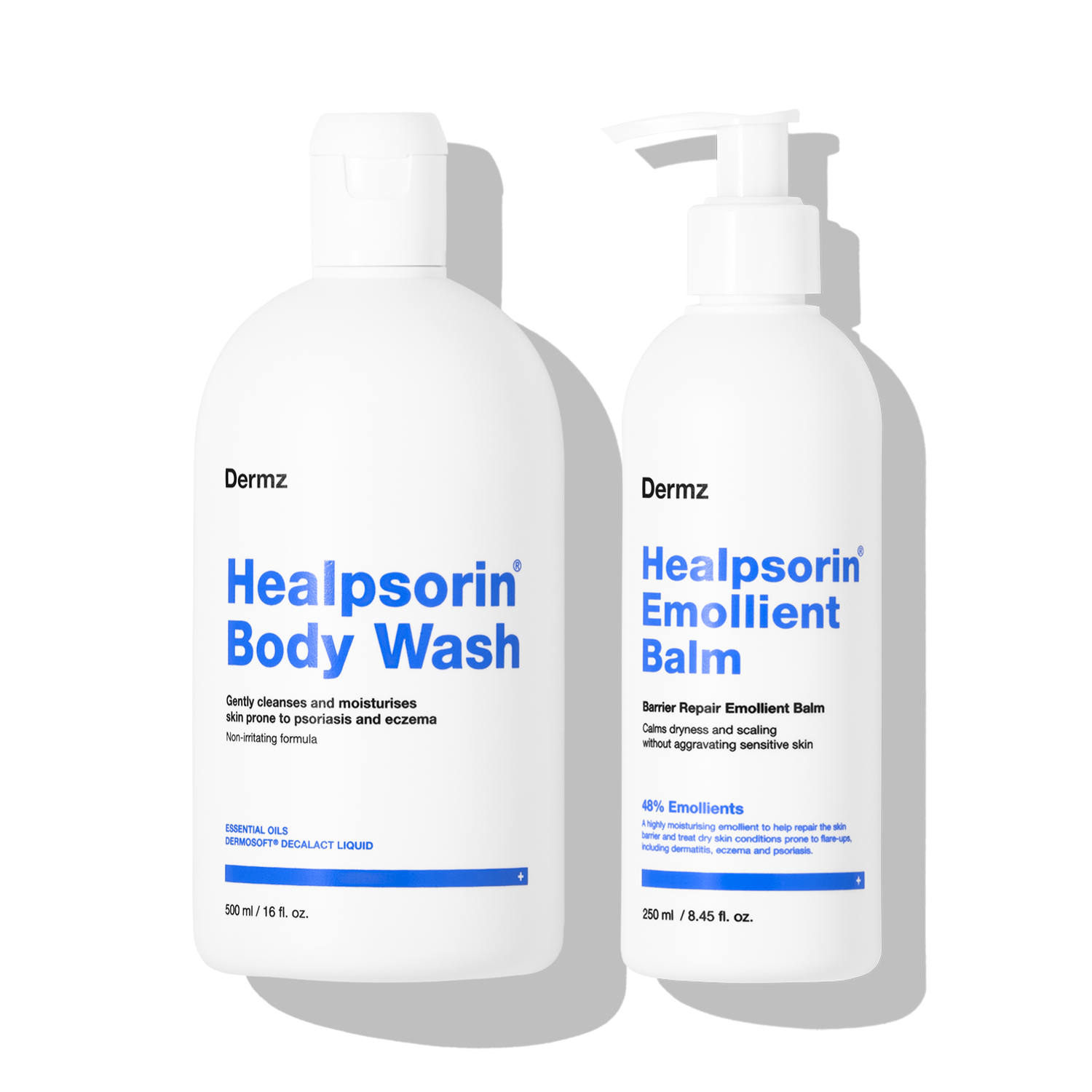
For parents who prefer a dedicated baby shampoo, Dermz Laboratories Healpsorin Baby Shampoo is formulated for gentle cleansing of the hair and irritated scalp from birth and is listed by Dermz for cradle cap care. Its formula includes glycerin, betaine and panthenol alongside gentle cleansing ingredients. It can be used as part of a gentle skincare routine, but it should not be presented as a treatment that cures cradle cap or as a substitute for medical advice or prescribed treatment when these are needed.
FAQ – Frequently asked questions about cradle cap
- What is the fastest way to get rid of cradle cap? The fastest safe way to get rid of cradle cap is to soften the scales first, gently loosen only those that come away easily, and then wash your baby's scalp with a mild, unfragranced baby shampoo. Avoid scraping, scratching or picking at firmly attached scales, as this can irritate the skin and increase the risk of secondary infection. Cradle cap usually improves gradually over a few weeks or months rather than disappearing after a single treatment.
- Should you leave cradle cap alone or remove it? Mild cradle cap can be left alone if it is not bothering your baby, as this harmless skin condition often settles naturally within a few months. If you want to remove cradle cap scales, soften them first with a suitable emollient or oil and use a soft-bristled baby brush to gently loosen only the scales that lift without resistance. Do not scrape the baby's scalp or try to remove firmly attached scales.
- Can breast milk get rid of cradle cap? There is not enough cradle-cap-specific clinical evidence to recommend breast milk as a treatment for cradle cap. Although breast milk is sometimes suggested as a home remedy for baby's skin, its effectiveness for infantile seborrhoeic dermatitis has not been established. Gentle scalp care using an appropriate emollient, careful brushing and a mild baby shampoo is consistent with current clinical guidance.
- Can Vaseline get rid of cradle cap? Petroleum jelly, commonly known by the brand name Vaseline, can help soften firmly attached cradle cap scales, but it does not treat infantile seborrhoeic dermatitis itself. Apply only a small amount to the baby's scalp, leave it long enough to soften the scales, and then gently loosen any scales that come away easily before washing the baby's hair. Petroleum jelly is therefore best viewed as a way to soften scales rather than a treatment that cures cradle cap.
- Can you prevent cradle cap from coming back? There is no guaranteed way to prevent cradle cap from returning, but gentle scalp care can help reduce the build-up of scales. Wash your baby's hair with a mild, unfragranced baby shampoo and soften new scales with a suitable emollient before trying to loosen them. If cradle cap keeps returning, becomes significantly itchy or sore, or spreads beyond the baby's scalp, ask a healthcare professional for advice.
References
-
Chiriac A, Wollina U. “Pediatric Dermatitis Seborrhoica – A Clinical and Therapeutic Review”. Indian Dermatology Online Journal, 2024 https://pmc.ncbi.nlm.nih.gov/articles/PMC11152465/?
-
Victoire A, Magin P, Coughlan J, et al. “Interventions for infantile seborrhoeic dermatitis (including cradle cap)”. Cochrane Database of Systematic Reviews, 2019 PubMed Central – Cochrane Review
-
DermNet – “Seborrhoeic dermatitis” DermNet – Seborrhoeic dermatitis
-
Dermz Laboratories – Healpsorin Baby Shampoo Dermz Laboratories – Healpsorin Baby Shampoo