Hand eczema can make an ordinary morning uncomfortable: washing up stings, a button catches on a sore fingertip and typing reopens a crack. Also called hand dermatitis, this non-contagious skin condition affects around one in 20 people, according to the British Association of Dermatologists. It is not caused by poor hygiene. Understanding the causes and recognising flare-ups helps you choose treatment and build a manageable skincare routine.
What is hand eczema?
Hand eczema is inflammation of the hands and fingers, causing itching, dryness, colour changes, scaling, cracks or blisters. It may appear briefly, recur in flare-ups or become persistent. Dyshidrotic eczema is one blistering pattern.
The skin barrier works rather like a brick wall: skin cells form the bricks, while lipids such as ceramides, cholesterol and fatty acids help hold them together. Damage lets irritants enter and water escape. This increased moisture loss is called transepidermal water loss (TEWL).
Chronic hand eczema lasts longer than three months or returns at least twice in a year after clearing between episodes. It can continue for years, although identifying contributing factors and finding suitable treatment can improve control.
How do I get rid of hand eczema? A plan to treat hand eczema usually combines avoiding triggers, regular emollients and topical corticosteroids during flare-ups. Treatment controls symptoms, but this recurrent skin condition may need ongoing care. If you are unsure how to treat eczema, ask a healthcare professional.
Is hand eczema the same as hand dermatitis?
Yes – hand eczema and hand dermatitis are two names for the same condition.
Both terms describe the same inflammatory skin condition. Contact dermatitis is linked to external exposure; atopic dermatitis involves an underlying atopic tendency. These mechanisms can overlap.
How does hand eczema affect daily life?
Hand eczema can affect four areas of daily life: work, sleep, social contact and mental health.
-
Work: Sore fingers make typing, gripping tools and preparing food difficult; some jobs repeatedly expose the hands to aggravating substances.
-
Sleep: Itching can interrupt sleep, leaving you tired the next day.
-
Social contact: Visible changes can cause self-consciousness about shaking hands or showing your skin.
-
Mental health: Persistent discomfort can contribute to anxiety, low mood and psychological distress.
Hand dermatitis is the most common occupational skin disease. Studies in selected high-risk occupations report prevalence as high as 40%. This is not a figure for all workers. Severe cases can cause long-term disability, so tell your GP if symptoms interfere with work.
What are the symptoms of eczema on hands?
Eczema on hands can cause six main symptoms: itching, redness or other inflammatory colour changes, dryness, scaling, blistering and cracking. Eczema symptoms range from mild dryness to intense itching; severe episodes may involve blisters and deep fissures.
-
Itching: The urge to scratch ranges from occasional irritation to persistent discomfort.
-
Redness: Inflamed areas look pink or red on lighter skin, or purple, grey or darker brown on darker skin.
-
Dryness: The surface feels rough, tight or less supple.
-
Scaling: Flakes or scaly patches develop as the surface sheds.
-
Blistering: Small fluid-filled blisters appear in some forms.
-
Cracking: Fissures develop where skin stretches or bends.
Symptoms can change: blisters may give way to peeling, while persistent inflammation leaves the skin thicker and less flexible.
What can be mistaken for eczema on hands? Psoriasis and fungal infections can look similar. Psoriasis may cause thick, scaly patches; a fungal infection can affect one hand alongside athlete’s foot. An examination and, sometimes, skin scrapings help distinguish these from eczema, including dyshidrotic eczema.
Acute eczema symptoms: itchy blisters, redness and weeping
Acute hand eczema causes inflamed, swollen skin, often with itchy blisters and weeping. It can feel hot, sore and intensely itchy. Small, fluid-filled blisters particularly suggest dyshidrotic eczema (pompholyx). A cool, damp compress can briefly soothe irritated skin; apply an emollient afterwards.
A dyshidrotic eczema episode usually lasts two to three weeks, then the blisters dry out and the skin peels; other forms can follow a different course. Scratching or piercing blisters increases the risk of secondary bacterial infection, including Staphylococcus aureus.
Chronic hand eczema symptoms: thick skin, scaly patches and painful cracks
Chronic hand eczema commonly causes persistent scaling, thick skin and painful cracks. Symptoms often improve for a time, then flare up again.
Scratching and inflammation can exaggerate normal skin markings, called lichenification. Reduced flexibility makes movement uncomfortable: a crack across a finger joint can reopen whenever you grip something.
Cracked skin, bleeding or impaired movement warrants a treatment review. Seek advice about new or worsening symptoms, especially increasing pain, swelling, pus or fever. Hyperkeratotic eczema is one thickened pattern, but allergic contact dermatitis can look similar. Persistent hand dermatitis may warrant patch testing.
Where on the hands does eczema appear?
Eczema on hands can affect the fingertips, finger webs, palms, backs of the hands and wrists.
-
Fingertips: Scaling and fissures may follow contact with food, plants or nail products.
-
Finger webs: Dampness and trapped cleanser encourage irritation.
-
Palms: Thickened patches or the small vesicles of dyshidrotic eczema can develop here.
-
Backs of the hands: Exposure-related and atopic patterns commonly affect this area.
-
Wrists: Eczema may extend to sites where gloves or jewellery touch the skin.
Distribution gives clues, but does not establish the cause. Dyshidrotic eczema often affects the sides of the fingers; an unusual one-sided eruption also suggests checking for fungal infection.
What are the types of hand eczema?
Clinical eczema types include dyshidrotic, hyperkeratotic, discoid and fingertip patterns. These eczema types describe appearance, and each can have several causes.
A pattern describes what the rash looks like; a cause explains why it developed. Dyshidrotic eczema may have an allergic component, while fingertip eczema may follow repeated irritation.
|
Type |
Appearance |
Typical location |
Typical trigger or association |
|
Dyshidrotic eczema |
Small, deep-seated, itchy blisters |
Palms and sides of fingers |
Sweating or relevant contact exposure; often no single cause |
|
Hyperkeratotic pattern |
Thick scaling and fissures |
Central palms |
Often an internal predisposition; manual work is an association |
|
Discoid pattern |
Rounded, clearly defined patches |
Backs of hands and other limb sites |
Dryness, irritation or minor injury |
|
Fingertip eczema |
Scaling and painful fissuring |
Finger pads |
Occupational or household contact |
Appearance can change between flare-ups. Photographs of earlier episodes help at appointments.
Dyshidrotic eczema (pompholyx)
Dyshidrotic eczema, also called pompholyx, is a common form of hand eczema estimated to account for 5–20% of cases, although its exact prevalence is uncertain. It causes recurrent, deep-seated, 1–2 mm itchy blisters on the palms and sides of the fingers; feet may also be affected. Dyshidrotic eczema can cause intensely itchy skin before blisters appear, followed by peeling and soreness.
The cause of dyshidrotic eczema is not fully understood. Heat, sweating, stress and certain contact exposures aggravate symptoms in some people; fungal infection of the feet can accompany a similar hand eruption.
Dyshidrotic eczema does not mean sweat glands are blocked. Avoiding nickel-containing foods is not routinely necessary; dietary restrictions need an individual clinical reason.
Hyperkeratotic eczema of the palms
Hyperkeratotic eczema produces sharply defined, thickened, scaly areas on the palms, often with painful fissures and without blisters. It tends to begin in middle age and is more common in men. The central palms are typical sites, although fingers and soles can also be involved. The cause is often unclear.
A clinician needs to distinguish this pattern from palmar psoriasis and fungal infection. Emollients support comfort and flexibility, while urea-containing preparations help soften thickened skin. However, urea can sting open fissures, so product choice and strength need care.
Unlike dyshidrotic eczema, blistering is not a defining feature. Persistent thickening warrants assessment.
Discoid eczema on the hands
Discoid eczema causes rounded or oval patches with clearly defined edges, giving the lesions a coin-shaped appearance. Patches can be dry and scaly or inflamed and weeping. The surrounding skin is often dry too. Hands can be affected, although lesions also occur elsewhere on the limbs.
Dryness and minor skin injury are recognised associations. Because fungal infection can produce a similar rounded rash, an uncertain diagnosis sometimes requires skin scrapings.
Discoid eczema differs from dyshidrotic eczema chiefly in its appearance: defined patches are more prominent than crops of tiny palm or finger vesicles.
Fingertip eczema
Fingertip eczema affects the finger pads, causing dryness, scaling, soreness and fissures. A cracked fingertip catches on fabric, hurts when you press a key and makes fastening a necklace awkward.
Relevant exposures include food preparation, gardening, adhesives and acrylates in artificial nail products. Irritation, delayed allergy and other contact reactions are possible explanations.
Protection and frequent moisturisation help, but ongoing symptoms deserve investigation. Patch testing is useful when a delayed allergic cause is suspected. Fingertip hand eczema can therefore need more than a change of cream. Applying a richer, well-tolerated emollient before bed can help keep sore fingertips comfortable.
What causes eczema on hands?
Eczema on hands develops through 3 main causes: irritant contact dermatitis, allergic contact dermatitis and atopic dermatitis. What causes eczema on hands is often a combination of repeated irritation, delayed allergy and an underlying atopic tendency.
All three pathways disrupt the skin barrier and cause inflammation. Irritants damage the outer layer directly, allergens activate immune responses, and atopic dermatitis increases vulnerability through inherited and inflammatory changes. Several mechanisms often overlap.
Irritation is the most common cause of hand dermatitis. DermNet estimates that irritants contribute to around 80% of occupational cases. That figure does not describe all cases, nor leave a simple 20% for allergy: irritant, allergic and atopic mechanisms can coexist.
Why have I suddenly got eczema on my hand? Consider a new job, detergent, gloves or jewellery, more frequent hand washing, or winter weather. Even a familiar product can become a problem if you develop an allergy after years of tolerating it.
Five important risk factors help explain why some people develop hand eczema more readily:
-
Atopy: Current or previous atopic dermatitis increases susceptibility to irritation.
-
Occupation: Work that involves repeated contact with water or chemicals increases risk. UK examples include hairdressing, healthcare, cleaning, catering, construction, mechanical work and metalworking.
-
Gender: Higher rates in women partly reflect occupational and household exposure patterns.
-
Age: Symptoms can develop at any age; changing routines and cumulative exposure influence their onset.
-
Genetics: Filaggrin gene mutations can weaken the outer skin layer, especially with atopic dermatitis; not everyone with hand eczema has a mutation.
These risk factors interact. Frequent exposure to water or detergents may overwhelm recovery, while cold and low humidity add to the burden. Understanding repeated contact helps explain ongoing irritation.
Irritant contact dermatitis
Irritant contact dermatitis is inflammation caused by direct damage to the protective skin barrier through repeated contact with water, detergents, solvents or friction, without prior allergic sensitisation.
Exposure to irritants removes protective lipids and natural moisturising factors, increasing TEWL. The surface becomes dry and prone to tiny cracks, allowing further penetration and inflammation.
Examples include soaps, detergents, alcohol-based hand sanitisers, solvents, machine oils and juices from raw meat or vegetables. Harsh chemicals are not the only problem: repeated contact with milder substances can also cause damage.
Cumulative irritation often develops over weeks or months, although a strong irritant can cause immediate irritant contact dermatitis.
Allergic contact dermatitis
Allergic contact dermatitis is a delayed, type IV allergic reaction to a substance that the skin has previously become sensitised to. “Type IV” means immune cells called T cells recognise the allergen and trigger inflammation, rather than an immediate response. Symptoms usually appear 24–72 hours after skin contact, so you may miss the connection. Contact sensitivity can develop after years of tolerating a product. Patch testing is the standard method for confirming contact allergy; a dermatologist interprets results alongside your exposure history. Your GP can arrange a dermatology referral when allergic contact dermatitis is suspected.
Five important allergen groups are:
-
Nickel: A metal in jewellery, coins and tools; symptoms depend on how much nickel reaches the skin.
-
Rubber accelerators: Chemicals such as thiurams and carbamates in some rubber and nitrile gloves.
-
Preservatives: Ingredients in soaps and creams; methylisothiazolinone is a recognised allergen in some rinse-off products and cleaners.
-
Fragrance mix: A patch testing mixture that detects allergy to common fragrance ingredients.
-
Chromate: An allergen associated with cement and chromium-tanned leather.
Atopic dermatitis and a weakened skin barrier
People with atopic dermatitis are more likely to develop hand eczema because their protective skin function and immune responses are altered.
Atopic eczema, asthma or hay fever can provide clues, but do not prove the cause. Filaggrin helps organise the outer skin layer and form natural moisturising factor; reduced function promotes moisture loss. Not everyone with atopic dermatitis has a filaggrin mutation.
Water and cleansers may therefore trigger eczema even with limited exposure. Atopic eczema can coexist with contact dermatitis.
Care matters between episodes. A clinician may consider mild steroids for selected thinner areas, but usually needs a stronger preparation for inflamed palms.
What triggers hand eczema flare ups?
Hand eczema flare ups are triggered by 3 groups of factors: wet work and hand washing, chemical irritants and gloves, and environmental factors such as cold weather, sweat and stress. A cause explains why hand eczema develops, whereas a trigger is an exposure or circumstance that brings on or worsens an episode of symptoms.
Wet work and frequent hand washing
Commonly used wet work criteria include wet hands for at least two hours daily, 20 or more hand washes, or at least two hours in occlusive gloves. These are screening thresholds, not safe limits. Washing removes protective lipids; hot water and alkaline soaps (pH 9–10) disrupt the acid mantle (normally pH 4.5–5.5). Scrubbing away flakes increases itching and redness. Use lukewarm water and fragrance-free soap substitutes for routine hand washing, remove rings and moisturise after every wash.
Harsh chemicals, detergents and rubber gloves
Harsh chemicals, including detergents, disinfectants, solvents, hair dyes, cement and machine oils, can trigger eczema through irritation or allergy. Rubber gloves may worsen hand eczema: accelerators can cause contact allergy, while trapped sweat waterlogs the surface (maceration). Nitrile gloves may contain accelerators too. For washing up, choose suitable accelerator-free nitrile or vinyl gloves with cotton gloves underneath, and take breaks after around 20 minutes to let your hands cool and dry.
Cold weather, sweat and stress
Cold weather, low humidity and central heating increase moisture loss; sudden temperature changes can also aggravate eczema flares. Heat and sweat may worsen dyshidrotic eczema (pompholyx), while wool against bare skin can irritate. Stress involves hormonal and nerve–immune signals that can intensify itch, feeding the itch–scratch cycle. Persistent symptoms can affect mental health too. Wear softly lined winter gloves, avoid overheating and seek support if stress is affecting your wellbeing.
Keep a trigger diary for four weeks to track eczema flares. Record washing, time with wet hands, products, gloves, weather, sweating and stress alongside itching, dryness, blisters or cracks. Note treatment changes. Review weekly and, where practical, reduce one suspected exposure at a time. Discuss patterns with your GP: avoiding triggers becomes easier when you know which exposures matter.
How to care for eczema on hands every day without steroids?
Daily care for eczema on hands rests on 3 pillars: gentle cleansing, barrier-restoring moisturisation and physical protection.
Barrier care underpins management whatever the cause: emollients soften dry skin, retain moisture and, depending on their ingredients, supply lipids. They reduce TEWL, the water escaping through the skin. Maintaining skin hydration helps relieve symptoms such as itching and tightness and can help the skin heal. Regular care also helps protect against further irritation.
Steroid-free emollients are generally suitable for long-term use if tolerated, without steroid-related skin thinning or topical steroid withdrawal. They support everyday care, but prescribed treatment may still be needed to reduce inflammation during flare-ups.
How to wash hands with eczema?
To wash hands with eczema safely, follow 5 steps.
-
Use lukewarm water, not hot water. Remove rings first, so cleanser and moisture cannot collect underneath.
-
Replace soap with a soap substitute or emollient wash. Choose a gentle, fragrance-free, soap-free formula without sodium lauryl sulphate (SLS).
-
Rinse thoroughly, including your palms, backs of the hands and finger webs.
-
Pat dry with a soft towel; do not rub. Dry finger webs carefully, leaving the rest slightly damp.
-
Apply emollient within 3 minutes, covering your palms, fingers, knuckles and backs of the hands.
What is the 3 minute rule for eczema? Apply an emollient within three minutes of washing or bathing, while the skin is slightly damp, to retain moisture and reduce water loss. It is a practical target, not a deadline: moisturise as soon as possible if you miss it.
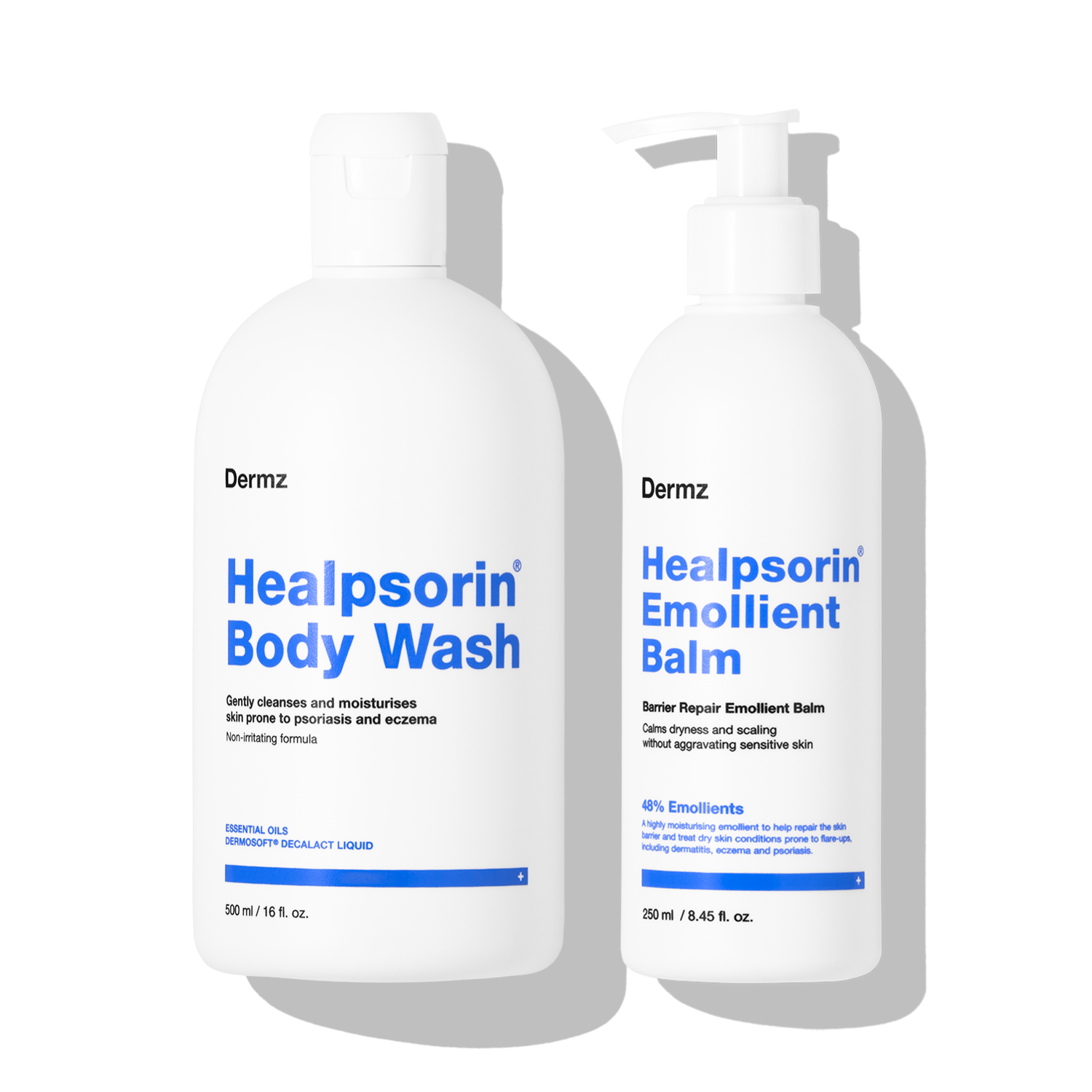
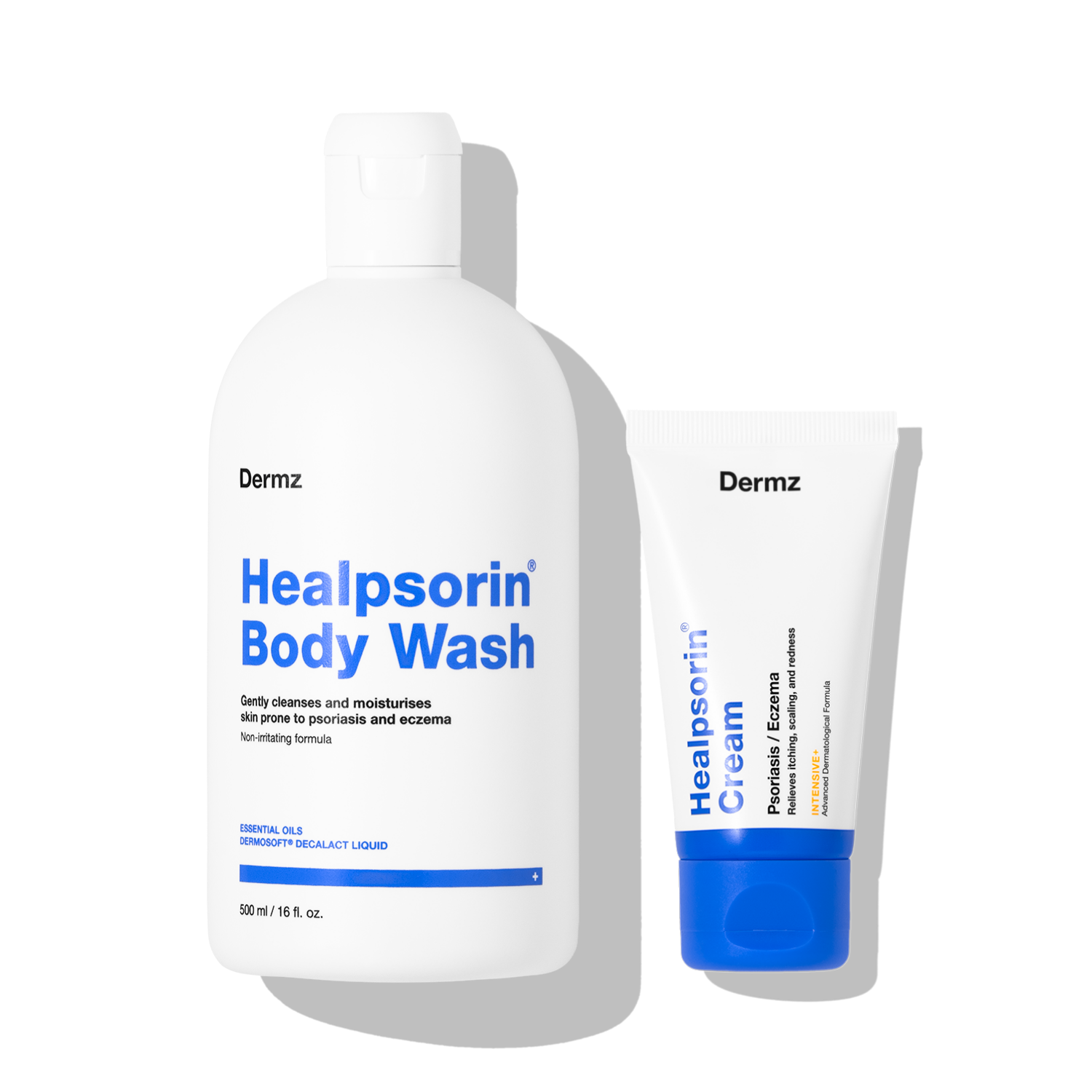
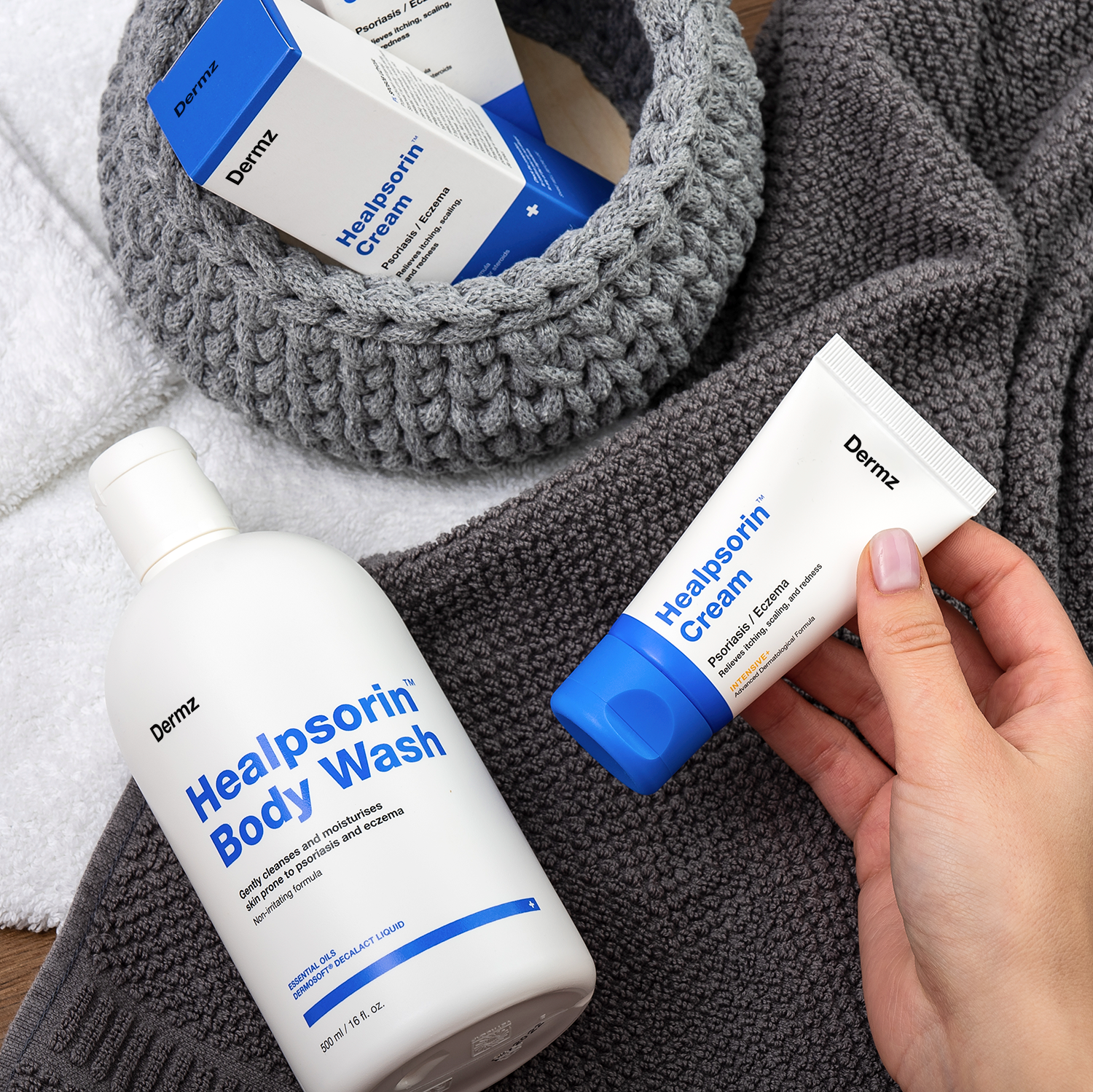
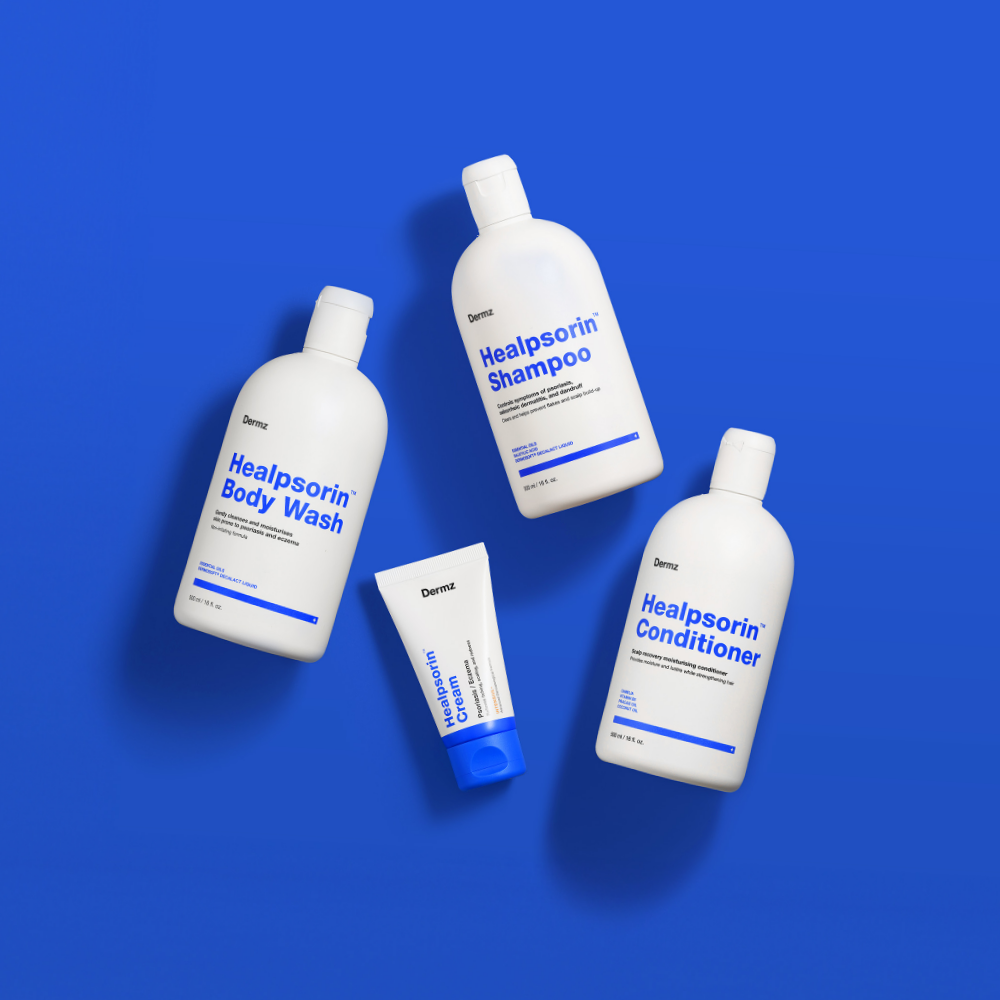
Soap-free cleansers with a declared pH around 5–5.5 are reasonable options; pH alone does not establish gentleness. Healpsorin Body Wash lists soap-free cleansing ingredients, glycerin and urea, without SLS. However, it contains fragrance and essential oils, and its pH is not published. Use it on hands and body only if tolerated; choose a fragrance-free alternative if needed.
Avoid unnecessary extra washing while following infection-control requirements. Alcohol-based hand rubs containing emollients can be less irritating than soap, although broken skin may sting. Let them dry before applying an emollient; follow workplace product policies.
What is a good cream for eczema on the hands?
A good cream for eczema on the hands is a steroid-free, fragrance-free emollient that supports the skin barrier and helps it retain moisture.
Five criteria can guide your choice:
|
Criterion |
What to look for |
|
Composition |
Moisture-binding glycerin and lipids such as ceramides, squalane or suitable plant oils. Urea at 5–10% may help dry, thickened skin, but can sting inflamed areas or open cracks. |
|
Absence of irritants |
Fragrance-free and free from known allergens. Avoid SLS in leave-on products. Paraben allergy is uncommon: “paraben-free” does not automatically mean gentler. |
|
Texture |
A comfortable daytime cream; a richer balm or ointment for very dry skin at night. Avoid greasy ointments on weeping eczema unless advised. |
|
Frequency |
Apply emollients after every hand wash and at least 3–4 times daily, adjusting to dryness and individual product instructions. |
|
Safety |
Choose a tolerated formula for ongoing use. Persistent burning, increased itching or a new rash warrants advice from a pharmacist or GP. |
No single moisturiser suits everyone. Avoiding triggers and choosing a formula you tolerate matter more than the product name.
Paraffin-based emollients form a useful protective film that reduces water loss; they can work alongside lipid-rich ingredients. Topical steroids have a different role: controlling active inflammation. Use them as prescribed, which may include intermittent maintenance.
Topical steroids are the most commonly prescribed medicines to treat eczema on the hands. They reduce inflammation and itching. Mild steroid creams, such as hydrocortisone, may suit thinner areas, but mild steroids are usually too weak for thick skin on the palms. Excessive or prolonged use can cause skin thinning; topical corticosteroids are generally safe when used as directed.
Other treatment options include topical calcineurin inhibitors: tacrolimus ointment and pimecrolimus cream. Unlike topical steroids, these non-steroid medicines do not cause steroid-related thinning. They may suit selected atopic sites, but can sting and may work less well on thick palms. Severe cases need specialist assessment; ultraviolet light treatment (phototherapy) and monitored oral medicines can help treat severe hand dermatitis.
A specialist may also consider delgocitinib, a non-steroid prescription cream for adults with moderate-to-severe chronic hand eczema when topical corticosteroids have not worked or are unsuitable. These treatment options address inflammation; cosmetic emollients support everyday barrier care.
Apply your emollient in 3 steps:
-
Dispense enough to cover both hands generously. Around 1–2 g is a rough guide, adjusted to hand size, dryness and texture, not an upper limit. That is roughly two to four adult fingertip units.
-
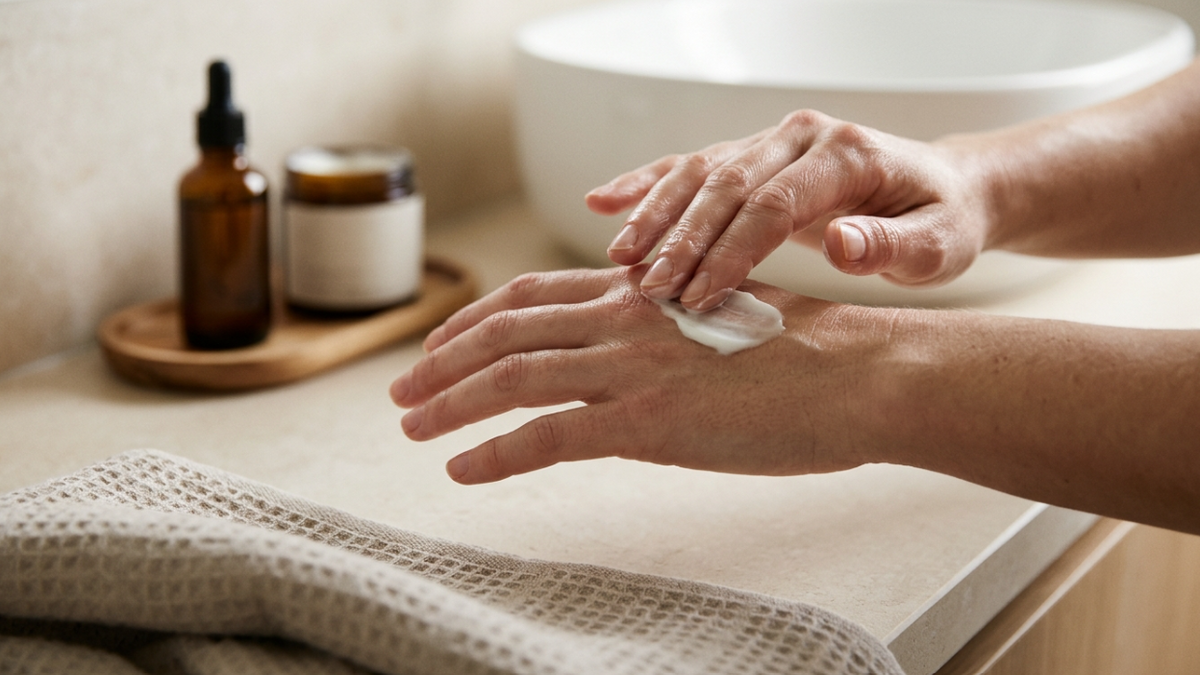
Smooth it gently over palms, fingers, knuckles and backs of the hands, without vigorous rubbing.
-
Reapply after washing or when your skin feels tight. Keep a suitable emollient beside the sink and in your work bag.
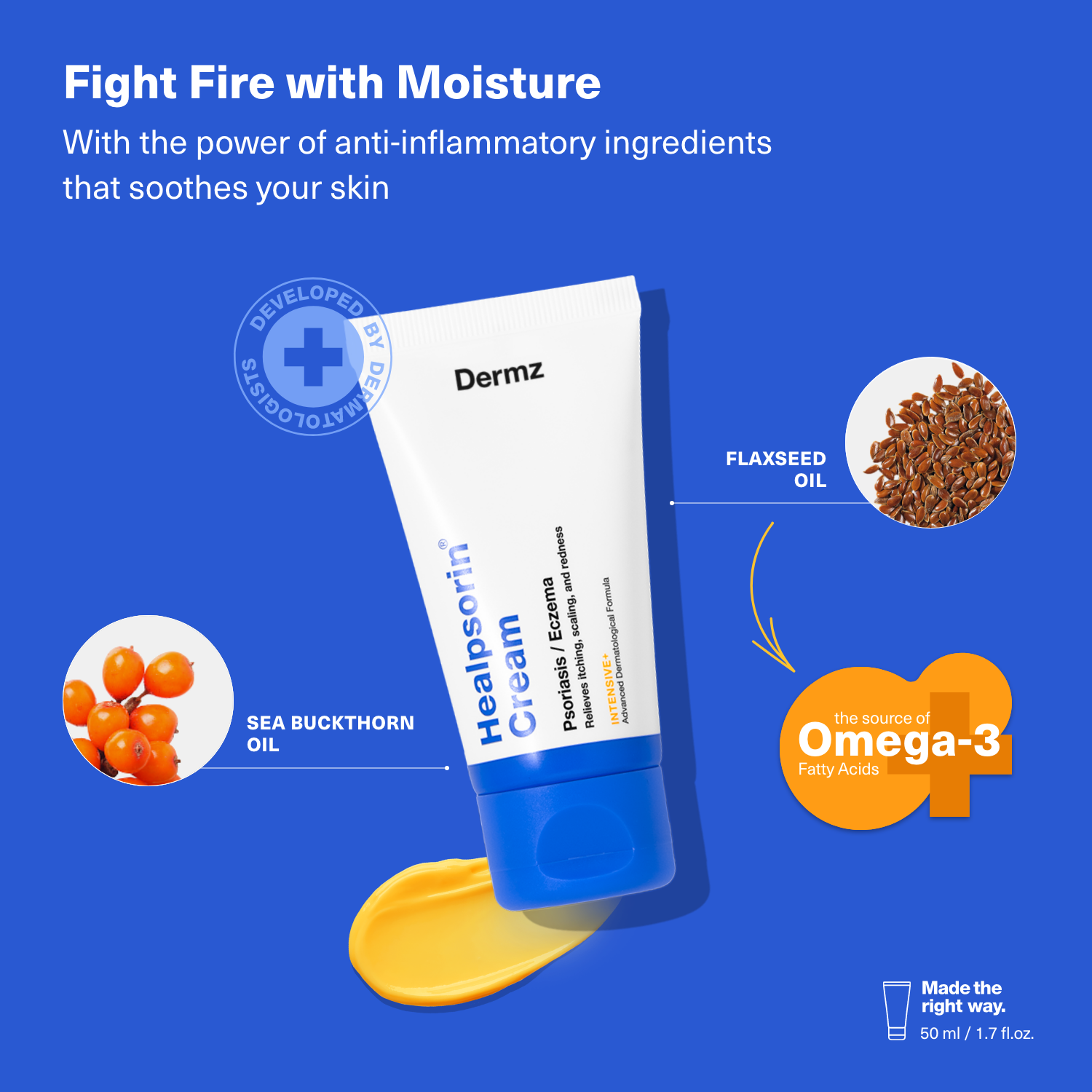
DERMZ Laboratories’ Healpsorin Cream is a steroid-free daytime moisturiser if tolerated. Glycerin attracts water; paraffin limits water loss; almond oil, sunflower oil and shea butter soften the surface. These ingredients support moisturisation, but do not replace prescribed treatment. The brand recommends twice-daily application.
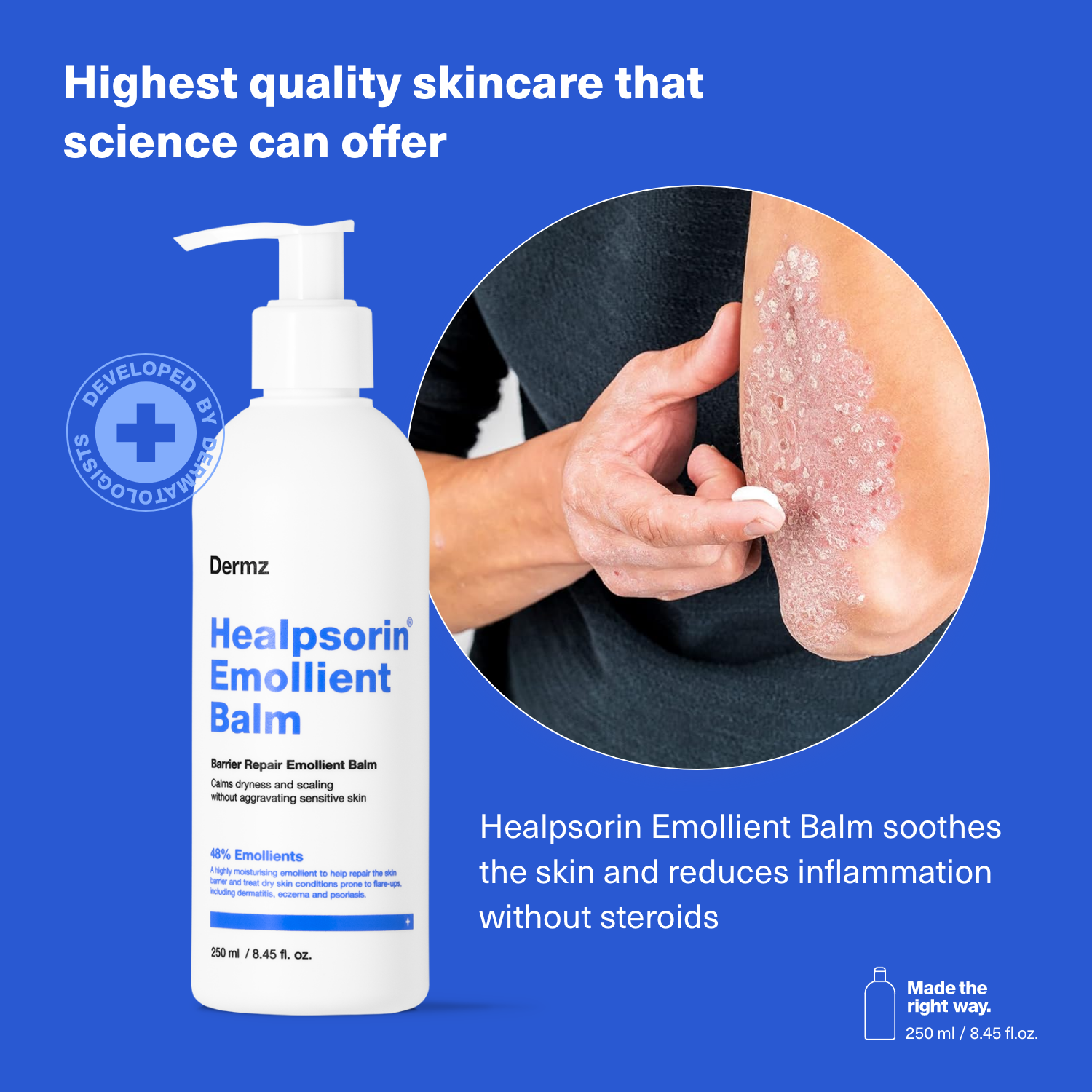
Healpsorin Emollient Balm contains urea and glycerin with emollient oils and butters for evening care. A tolerated cleanser, cream and balm can form a simple routine. The cream contains aromatic essential oils and the balm lists “Parfum”; choose alternatives if you have a relevant fragrance allergy.
H+P cream combines hemp seed oil and prebiotic ingredients, but also contains fragrance: very reactive skin or previous emollient intolerance calls for checking the whole formula, rather than assuming greater gentleness.
How to use protective gloves for hand eczema?
Protective gloves shield hand eczema from 3 types of exposure: water, chemicals and cold.
Follow these 5 steps:
-
Wear cotton-lined nitrile or vinyl gloves for wet work. Choose protective gloves suitable for the task and chemicals; seek an appropriate accelerator-free option if you have rubber accelerator allergy.
-
Limit each wearing to around 20 minutes during household cleaning; take breaks sooner if sweaty. At work, follow safety requirements and arrange suitable glove breaks.
-
Put on cotton gloves under rubber gloves or nitrile gloves when practical. Start with dry hands and change damp liners. Cotton-lined gloves do not reliably block rubber allergens.
-
Apply emollient before winter gloves, allowing it to absorb. Choose warm, softly lined gloves without rough wool against the skin.
-
Use cotton gloves overnight over a generous layer of tolerated emollient, such as Healpsorin Emollient Balm if suitable. Breathable cotton keeps moisturiser in place without waterproof occlusion.
Keep night gloves loose; remove them if damp, hot or itchy. Avoid sleeping in waterproof gloves and ask your GP before covering weeping or potentially infected eczema. Unlined latex or rubber gloves may aggravate sweating or allergy; nitrile can contain accelerators too. Emollient residue makes gloves and bedding more flammable: keep them away from cigarettes and naked flames.
Review comfort after 14 days, recording itch and tightness from 0–10. This is a check-in, not a promised recovery time; seek advice sooner if symptoms worsen.
A simple daily plan, using DERMZ products only if tolerated:
-
Apply Healpsorin Cream in the morning, then wear protective gloves for relevant tasks.
-
Reapply a suitable emollient after each wash, ideally within three minutes.
-
Cleanse gently in the evening with Healpsorin Body Wash if tolerated; pat dry and apply the second daily application of Healpsorin Cream.
-
Apply Healpsorin Emollient Balm at night; add clean cotton gloves if comfortable and the skin is not weeping or infected.
FAQ
Why have I suddenly developed eczema on my hands?
A flare-up can follow a change in your routine, such as more frequent hand washing, a new cleaning product or a job involving wet work. Cold weather can also dry out your skin, leaving it more vulnerable to irritation. Allergic contact dermatitis can develop after contact with something you have previously used without any problems, such as jewellery or rubber gloves. Several factors may contribute, particularly if you have a history of atopic eczema.
How can I tell whether my hand eczema is caused by an allergy?
Allergic contact dermatitis can look very similar to irritant contact dermatitis, so symptoms alone cannot reliably distinguish between them. An allergic reaction usually develops 24–72 hours after contact, which can make the trigger difficult to identify. If your GP suspects a contact allergy, they may refer you to a dermatologist for patch testing. This checks for delayed allergic reactions to specific substances. The results are assessed alongside your symptoms and the substances you come into contact with.
Can I manage hand eczema without steroid creams?
Gentle cleansing, frequent application of fragrance-free emollients and protection from irritants form the foundation of daily care. Apply an emollient after every hand wash and wear suitable protective gloves for wet work, using cotton liners where needed. These measures may be enough to manage mild symptoms, but an inflamed flare-up often needs prescribed treatment. Topical corticosteroids reduce inflammation and itching. Other treatment options may be suitable if corticosteroids do not help or cannot be used.
When should I see a GP about eczema on my hands?
See your GP if your symptoms persist, keep coming back, disturb your sleep or make everyday tasks difficult. Painful cracks, extensive blistering or symptoms that do not improve with regular skin care also warrant an assessment. Seek prompt medical advice if you notice increasing pain, warmth, swelling, pus or rapidly spreading redness, as these may be signs of infection. If your skin symptoms worsen and you also have a fever or feel generally unwell, seek urgent medical advice.