Today, we're going to talk about a topic that might sound like a myth, but is a fact: nighttime regeneration of acne-prone skin. It's no secret that what we do before bed has a huge impact on our complexion, especially when we're dealing with imperfections. However, what if I told you that some night creams intended to help you fight acne are actually doing a bit of harm? This is the trap we fall into, which inhibits the skin's natural rebuilding process and can intensify inflammation.
Prepare for a dose of knowledge about how our skin truly works when we sleep, and why the composition of your night cream is crucial in anti-acne therapy. Our mission is simple: to make you aware that night is a time of intensive repair, and poorly chosen products, instead of supporting, can disrupt this process. Let's discover how a conscious choice of night cream can transform your acne-prone skin.
Anti-acne regeneration: why is night crucial for acne-prone skin?
Does acne-prone skin require special attention during nighttime regeneration compared to normal skin?
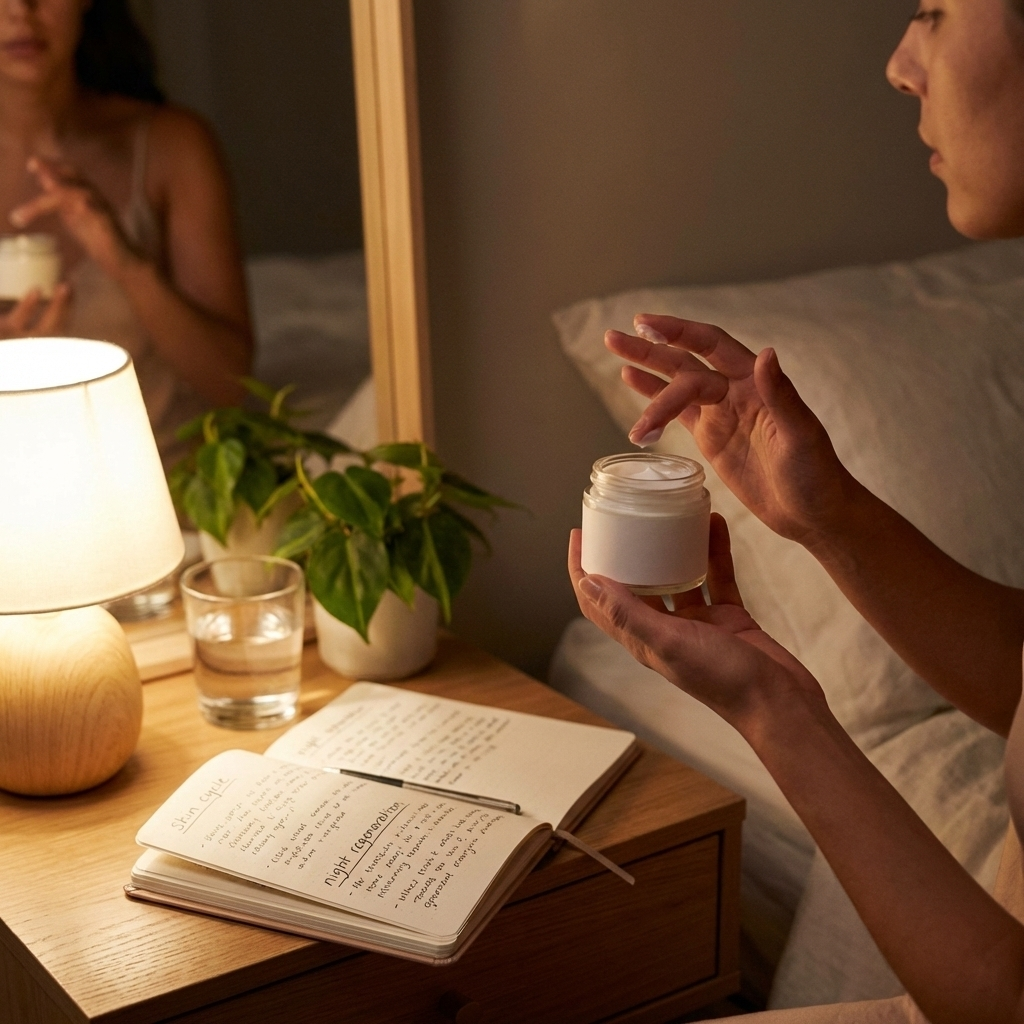
Nighttime regeneration of acne-prone skin is critical because this is when intensive cell division occurs, which allows for a more effective reduction of inflammation and scars. Increased skin permeability allows for deeper action of active ingredients such as retinoids or salicylic acid, which are key in the fight against acne and supporting the natural repair cycle.
How Does the Night Repair Cycle Support Acne Reduction?
Skin, especially acne-prone skin, is burdened during the day not only by pollution but also by fighting against sebum overproduction and $P. acnes$ bacteria. At night, when the skin switches to repair mode, processes essential for improving its condition take place:
- Accelerated Healing: the increased rate of cell division helps to regenerate damage from inflammatory lesions faster and accelerates the fading of post-inflammatory hyperpigmentation.
- Better ingredient absorption: higher skin permeability (TEWL) allows sebum-regulating, exfoliating, and anti-inflammatory ingredients - which are the basis of acne treatment - to penetrate more effectively.
- Barrier strengthening: proper nighttime regeneration helps rebuild the damaged lipid barrier, which is often compromised in acne cases by aggressive treatments.
What is the trap of irritating ingredients in night creams?
Many people with acne think that the stronger and more drying the products, the better. This is a big mistake. Night creams that give an immediate feeling of tightness may contain substances that, instead of healing, irritate and consequently worsen the problem.
The trap is using products that contain strong, drying alcohols, irritating fragrances, or overly aggressive acids in unstable formulas. These ingredients can damage the weakened lipid barrier of acne-prone skin, triggering secondary inflammation and paradoxically escalating sebum overproduction (the so-called "dryness acne"), which disrupts the natural repair cycle.
It's worth avoiding:
- Drying alcohols: alcohol Denat in high concentrations; it temporarily mattifies but leads long-term to dryness, barrier weakening, and a rebound effect – even greater oil production.
- Comedogenic oils: heavy oils (e.g., coconut oil) that can clog pores (are comedogenic), leading to the formation of new blackheads.
- Strong perfumes and dyes: these are a common cause of irritation and flare-ups of inflammation, which hinders the skin's nighttime regeneration.
Which ingredients treat acne and support nighttime rebuilding?
In the fight against acne at night, we need allies that actively target imperfections while simultaneously caring for rebuilding and soothing. This is the key to healthy nighttime regeneration.
What active substances should be in a night cream to effectively support the nighttime regeneration of acne-prone skin?
Precisely this approach is used in effective creams, such as Vitumisil Acne Control Night Cream, which combines therapeutic action with rebuilding properties. Look for the following ingredients:
- Salicylic acid (BHA): it is fat-soluble, allowing it to deeply cleanse pores from the inside, acting as an anti-inflammatory and antibacterial agent. It works extremely effectively at night.
- Dendriclear™: an acne-targeting ingredient that weakens acne-causing bacteria, reduces inflammation, and prevents hyperkeratinisation.
- Soothing and rebuilding substances: such as moringa and pequi oil. They are essential to balance the action of active ingredients and ensure peaceful nighttime regeneration.
Conscious night cream choice - the secret to anti-acne therapy
How to consciously choose a night cream to avoid aggravating acne and effectively support nighttime regeneration?
This is the most important conclusion: a conscious choice of night cream is the foundation of regeneration for acne-prone skin. Don't look for products that immediately dry out, but those that act strategically: treat acne, regulate sebum, but simultaneously rebuild the barrier and soothe irritation.
The composition should support the natural repair cycle, not disrupt it. Choose non-comedogenic, oil-free formulas or those with light, acne-friendly oils (e.g., squalane, jojoba oil). Give your skin what it needs in repair mode - a balance between the strength of treatment and the gentleness of care.
FAQ section - frequently asked questions about nighttime acne skin Regeneration
1. Is excessive drying of acne at night effective?
No, excessive drying of acne at night is not effective in the long run. While it may temporarily reduce a breakout, it damages the skin's hydrolipid barrier. A damaged barrier becomes more susceptible to inflammation, and the skin, trying to defend itself, may start producing even more sebum, which paradoxically exacerbates acne and hinders nighttime regeneration.
2. Which retinoids are best for beginners in nighttime anti-acne care?
For those beginning retinoid therapy in the context of nighttime acne skin regeneration, milder forms such as retinyl esters or retinaldehyde are best. They are more stable and gentler than pure retinol, yet show high effectiveness in regulating sebaceous glands and reducing blackheads, minimizing the risk of irritation.
3. Can I use Salicylic Acid (BHA) every night?
Many people with acne tolerate salicylic acid daily, especially in a well-formulated night cream or toner. BHA is lipophilic (fat-soluble), which allows it to work effectively within the pores. However, you should always observe your skin's reaction. If excessive dryness or irritation occurs, limit use to 2-3 times a week.
4. Why is my skin oilier in the morning despite using a night cream?
If the skin is very oily in the morning, it may be a result of dryness. Aggressive ingredients or insufficient hydration in the night cream cause the skin to enter defense mode (reactive seboregulation) and produce excessive amounts of sebum to compensate for the lack of moisture. This indicates a need to incorporate sebum-regulating ingredients (e.g., niacinamide) and barrier-rebuilding ingredients (e.g., ceramides).
5. Can I use a spot treatment under my night cream?
Yes, this is a recommended practice for nighttime regeneration. Apply spot treatments (e.g., with zinc, benzoyl peroxide) directly onto the inflammatory lesion after washing your face. Wait a few minutes for them to dry, and then apply a conscious choice of night cream to the entire face, only avoiding the areas where the strong spot treatment was applied (if the night cream is already very active).
6. How long should an anti-acne night treatment last to see results?
Visible results in the form of reduced inflammation and improved skin texture usually require patience. Full nighttime regeneration and stabilization of acne-prone skin using active ingredients such as retinoids typically appear after 8 to 12 weeks of regular use. Early, positive changes (less redness, better hydration) may be visible as early as 2-4 weeks.
7. Should an anti-acne night cream contain anti-wrinkle ingredients?
Absolutely. Many key anti-acne ingredients, such as retinoids and niacinamide, are also very effective anti-aging ingredients. The natural nighttime repair cycle perfectly utilizes their dual action: fighting acne through regulation and stimulating collagen production.
8. What characteristics should a cream have to be non-comedogenic and support nighttime regeneration?
A non-comedogenic cream that supports nighttime regeneration of acne-prone skin should not contain pore-clogging substances. Look for light emollients, water- or silicone-based formulas, and substances like niacinamide and salicylic acid that actively prevent blackhead formation. The label should state "non-comedogenic" or "non-pore-clogging."